
Does indian astrology really work? The answer depends on whether you expect scientific proof, exact event prediction, personal reflection or a traditional framework for understanding timing.
Modern controlled research has not established astrology as a reliably predictive empirical science. Yet many people continue to find structured insight in its language of birth charts, planetary periods and recurring life patterns.
Within Acharya Satvinder Ji’s philosophy, astrology is a guiding science for understanding planetary direction and timing. It supports aware planning and disciplined action rather than passive dependence.
Does indian astrology really work in practice?
A responsible answer must separate measurable scientific evidence from personal or spiritual usefulness. These are different standards, and neither should be hidden when evaluating astrology.
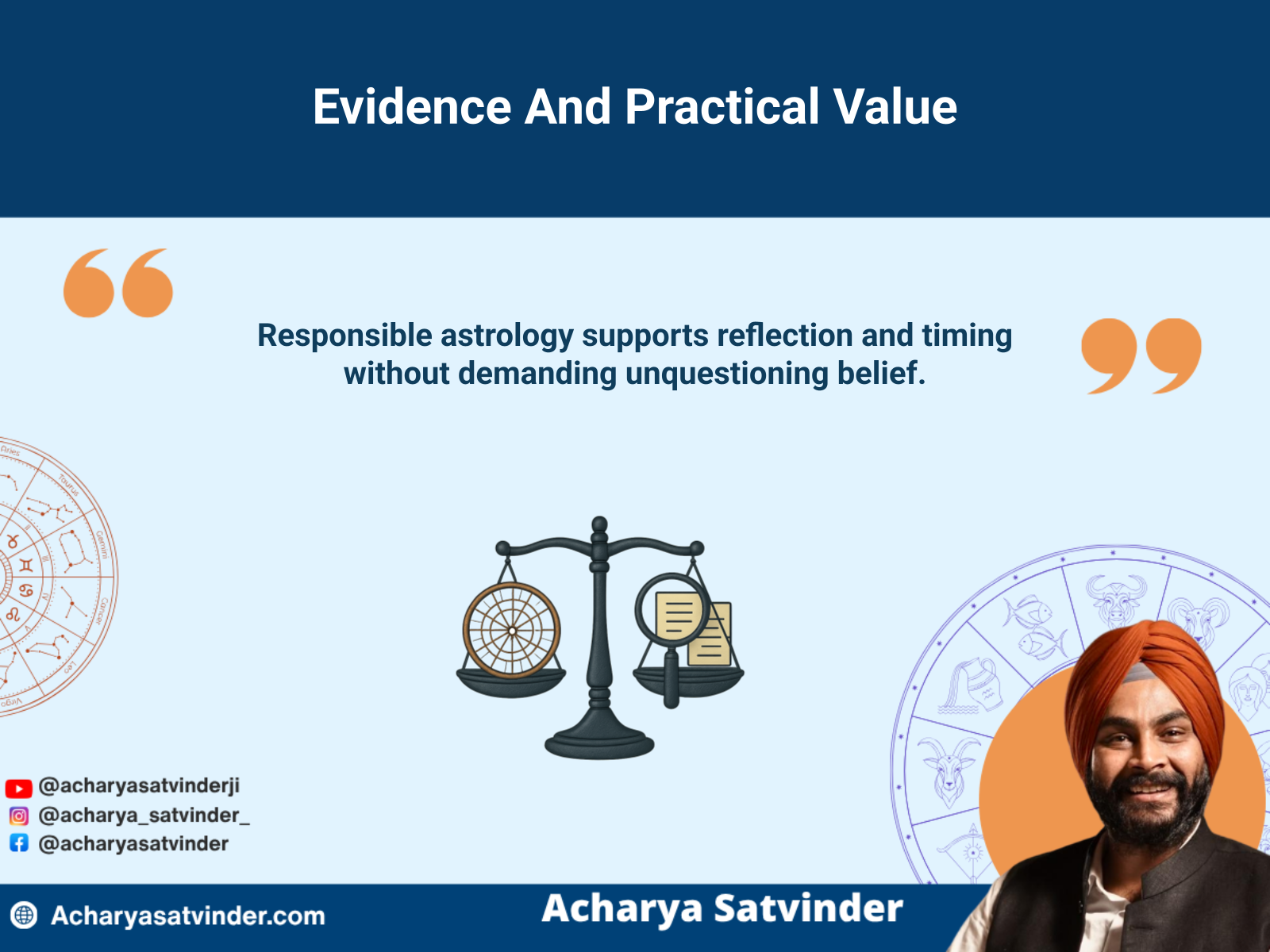
Astrology may help someone organize questions, recognize patterns and consider the timing of decisions. It should not be presented as certainty or as a replacement for evidence.
The most honest answer to does indian astrology really work is therefore conditional. Its practical value depends on chart accuracy, interpretation quality, realistic expectations and the actions taken afterward.
Controlled studies have generally not shown natal-chart matching to perform reliably above chance. The broader history and scientific status of Indian astrology also reflects the distinction between traditional practice and modern empirical science.
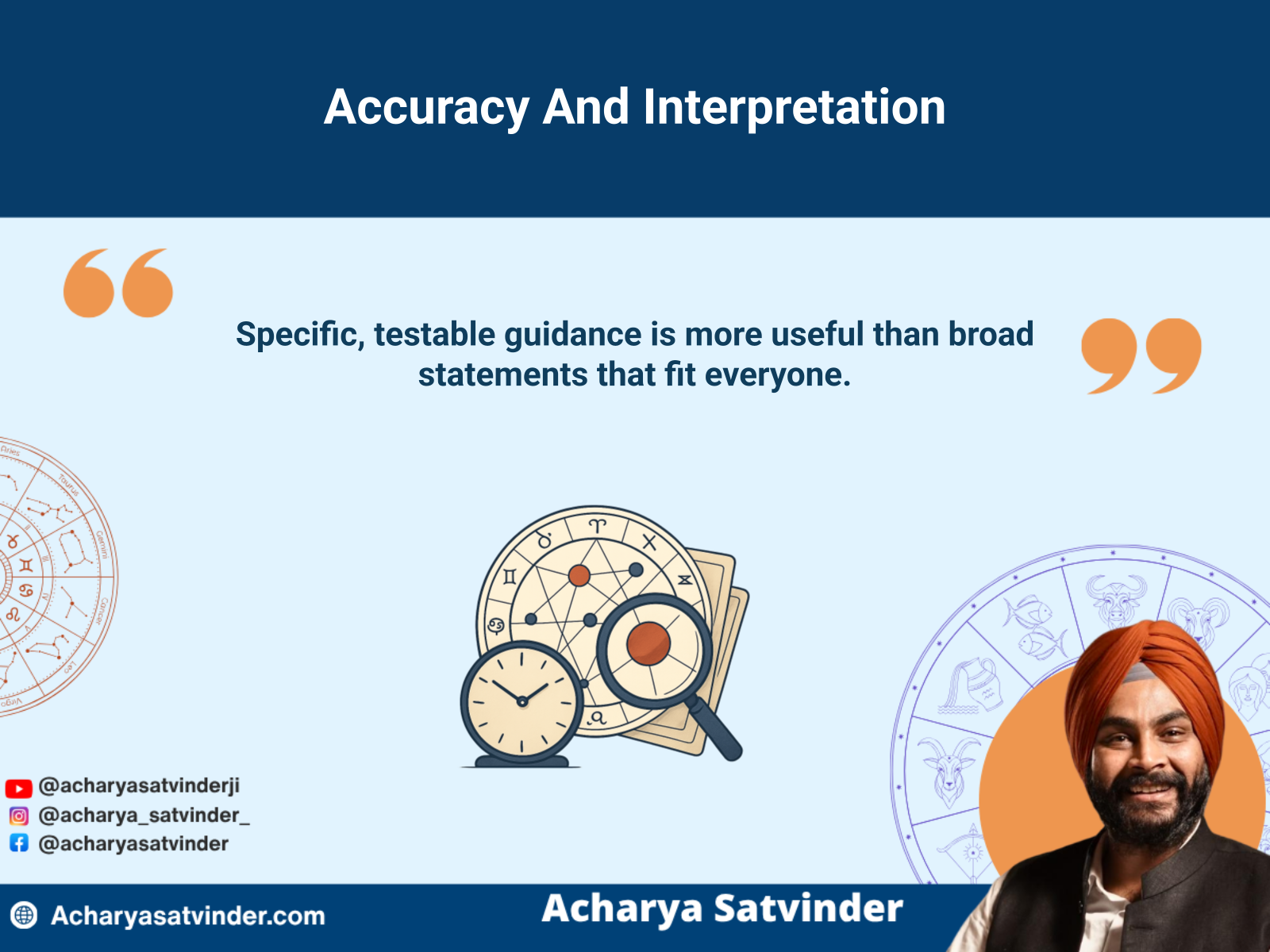
Astrology is most responsible when guidance remains specific, testable and open to thoughtful questioning.
That scientific limitation does not prevent someone from using a reading as a reflective tool. It does mean that dramatic promises and absolute predictions deserve caution.
Readers wondering whether Vedic astrology is more accurate should first ask what accuracy means: exact prediction, useful timing, character insight or better decision preparation.
What Indian astrology actually examines
A complete Vedic reading involves much more than a zodiac sign or one planet. It studies interacting chart factors and the periods during which particular themes may become more noticeable.
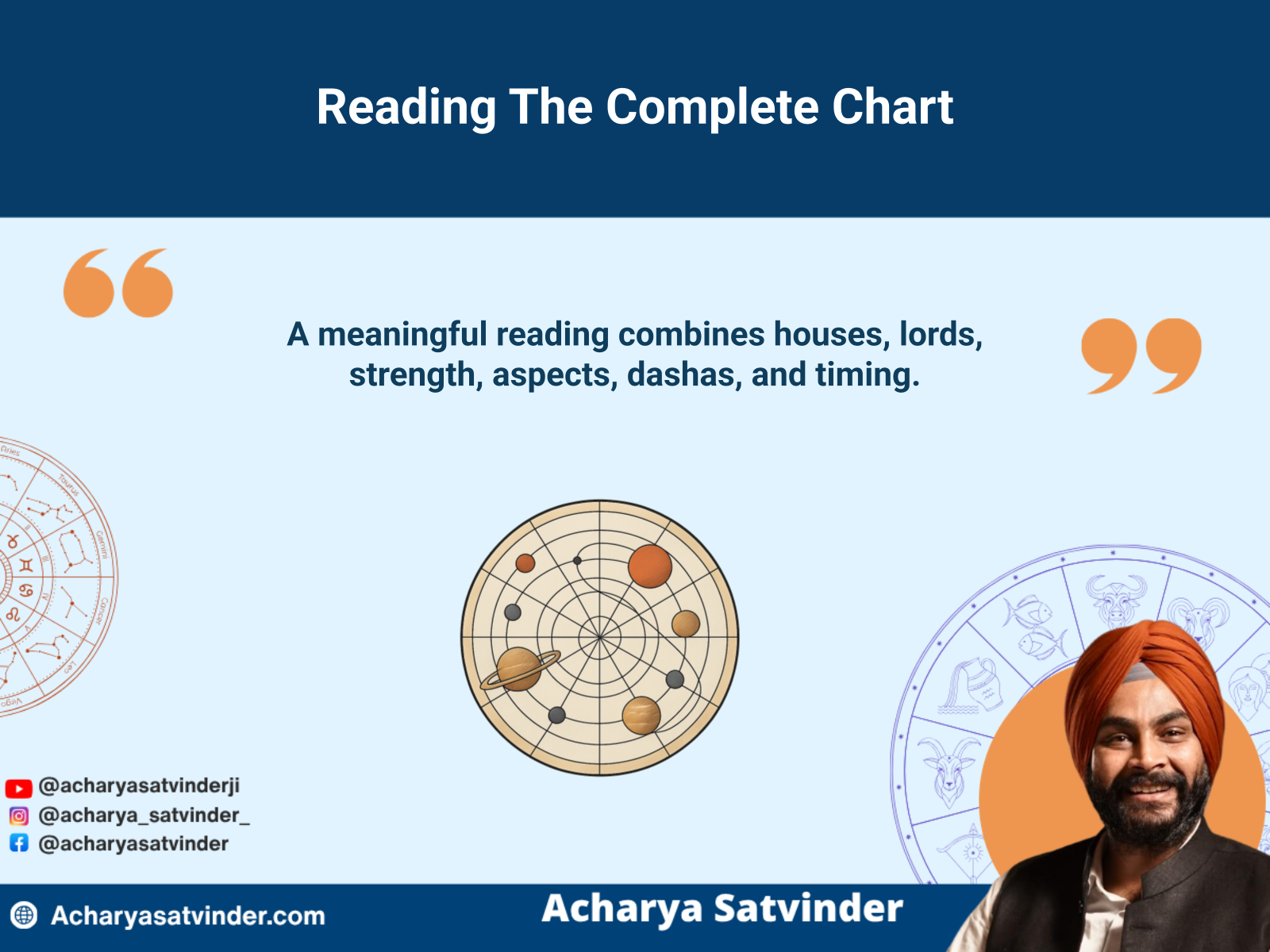
The birth chart maps planetary positions for a recorded time and place. Interpretation then considers how those placements relate to houses, signs, planetary relationships and changing periods.
- The ascendant and the structure of the twelve houses
- The Sun, Moon, planets, Rahu and Ketu
- House lords, planetary strength and functional roles
- Aspects, conjunctions and significant combinations
- Nakshatras and their interpretive context
- Dashas, sub-periods and relevant transits
No responsible conclusion should come from one isolated placement. House lords, strength, aspects, dashas, transits and the person’s circumstances must be interpreted together.
A useful comparison of Vedic and Western astrology can clarify why two systems may calculate or interpret the same birth information differently.
Students seeking the tradition’s foundation can also review the classical books behind Vedic astrology. These texts require context, patient study and careful application rather than literal rule-matching.
A chart is a connected pattern, not a collection of independent planetary verdicts.
Why readings may feel accurate or inaccurate
Some readings feel highly relevant, while others appear broad, contradictory or misplaced. The difference can arise from birth data, interpretation, wording, expectations and selective memory.
Birth information matters
An incorrect birth time can alter the ascendant, house structure and timing calculations. Place details and proper time-zone conversion also matter when preparing a chart.
Complete-chart synthesis matters
A strong planet does not automatically promise an easy outcome, and a difficult placement does not define an entire life. Every indication must be weighed within the whole chart.
Timing also changes interpretation. A potential shown in the birth chart may become more relevant during a related dasha or transit, while remaining less visible during another period.
Language and bias matter
Broad statements can seem personal because many people recognize themselves in flexible descriptions. This psychological tendency is commonly known as the Barnum effect.
A careful reading should therefore avoid flattering generalities. It should explain the chart logic, acknowledge uncertainty and distinguish observations from conclusions requiring real-world evidence.
Specific reasoning builds trust; vague certainty only creates the appearance of accuracy.
What astrology can and cannot do
Astrology can organize reflection around strengths, pressures, timing and choices. Its ethical limits are equally important because guidance should increase responsibility rather than fear.

A balanced reading may help a person:
- Identify recurring behavioural or decision patterns
- Prepare for demanding periods with greater discipline
- Review career, relationship or financial questions from another perspective
- Consider when patience, preparation or action may be appropriate
- Form clearer questions before making an important decision
It cannot guarantee a job, marriage, profit, recovery or specific event. It should never replace medical care, legal advice, financial analysis, professional expertise or personal judgment.
Astrological thinking may also be applied to organizations, although the meaning of corporate astrology still involves leadership choices, market evidence and operational responsibility.
Guidance becomes harmful when possibility is presented as certainty or fear replaces judgment.
How to judge a reading for yourself
You do not need unquestioning belief to assess whether a reading is useful. Evaluate its method, clarity and practical consequences rather than reacting only to impressive language.
- Check the birth data. Confirm the recorded time, date and place before interpretation begins.
- Ask for chart reasoning. A conclusion should connect several relevant factors, not one placement.
- Look for proportion. Guidance should acknowledge both supportive and demanding indications.
- Reject guarantees. Responsible astrology allows uncertainty and does not promise fixed outcomes.
- Write down key points. Review them later instead of relying on immediate emotion.
- Keep decision ownership. Use the reading as input, not as an order.
When people ask does indian astrology really work, they often want certainty during confusion. A better test is whether the reading produces clearer questions, disciplined preparation and responsible choices.
Those interested in understanding the method directly may consider learning astrology online. Serious study helps reveal why complete-chart analysis is more demanding than simplified predictions suggest.
A practical example of responsible guidance
Consider a hypothetical professional deciding whether to leave a stable role for a new opportunity. Astrology may highlight a period of expansion alongside pressure, delay or heavier responsibility.
A careless reading might announce success or failure as certain. A responsible reading would compare career houses, their lords, planetary strength, dashas, transits and the person’s actual employment conditions.
The individual should still examine compensation, contract terms, workplace stability, family needs and long-term goals. Astrological timing may inform preparation, but evidence and personal responsibility complete the decision.
Good guidance prepares a person to decide; it does not decide on their behalf.
Should astrology guide important decisions?
Astrology may contribute one perspective when a choice carries emotional weight or uncertain timing. It is safest when combined with facts, qualified advice and honest self-assessment.
So, does indian astrology really work as a stand-alone decision system? It should not be used that way because no chart removes uncertainty or replaces careful real-world evaluation.
Acharya Satvinder Ji’s approach treats planetary indications as direction for awareness and discipline. The chart may describe patterns shown from birth, but it does not remove free participation in life.
Naam Simran, Daan, Seva and disciplined living may support steadiness and conscious conduct. They are spiritual responses to life’s path, not tools for rewriting it.
FAQs
Does Indian astrology really work for everyone?
People may experience its usefulness differently because expectations, questions and interpretation quality vary. It should be treated as guidance rather than universal certainty.
Can an incorrect birth time affect a Vedic reading?
Yes, an incorrect time can change the ascendant, houses and some timing calculations. Use the most reliable recorded birth information available.
Is Vedic astrology scientifically proven?
Modern controlled research has not established it as a reliably predictive empirical science. It remains a traditional interpretive system used for reflection and guidance.
Should I make major decisions only from a birth chart?
No, major choices should also consider facts, risks and qualified professional advice. A chart may add perspective but should not control the decision.
What makes an astrology reading responsible?
A responsible reading considers the complete chart, explains its reasoning and acknowledges uncertainty. It avoids guarantees, fear and conclusions drawn from isolated placements.
Final Words
The strongest answer to does indian astrology really work is neither blind acceptance nor automatic dismissal. Use it as structured guidance, test its relevance carefully and keep every important decision grounded in responsibility.

Acharya Satvinder is a spiritual guide and life mentor who blends Sikh astrology, philosophy, and coaching to help you find clarity, balance, and purpose. He offers personalized guidance for career, relationships, stress, and spiritual growth — empowering you to unlock your true potential.
With over 20 years of experience, Acharya Satvinder is regarded as one of the most respected and Best astrologers in India for his ethical and disciplined approach. Each year, he guides more than 10,000 individuals through his teachings and consultations, including extensive one-to-one sessions with followers across India, Canada, USA and the global NRI community. His guidance explains discipline, conscious decision-making, seva, and inner clarity as the foundation of meaningful growth.