
Corporate astrology meaning refers to applying astrological principles to a company, organization or commercial venture. It studies business patterns, leadership direction and timing through carefully selected charts.
The purpose is not to promise profit or replace professional advice. It offers another perspective for understanding strengths, recurring pressures and periods requiring greater preparation.
Acharya Satvinder Ji approaches astrology as a guiding science that reveals planetary direction and patterns shown from birth. In corporate work, this philosophy supports informed planning, discipline and responsible action.
Corporate astrology meaning in Vedic practice
Vedic corporate astrology treats a business as an organized activity with a distinct beginning. Its chart is interpreted alongside the people whose decisions shape its direction.
A company may have a registration moment, public launch, first transaction or another documented beginning. The astrologer must identify which event answers the question before calculating a chart.
Corporate astrology meaning becomes clearer when it is viewed as pattern analysis rather than a shortcut to commercial certainty. It can describe tendencies involving identity, resources, communication, partnerships, responsibilities and public standing.
A corporate chart offers a symbolic map of business conditions. It does not remove the need for research, experience or accountability.
The chart is therefore used to organize questions and timing concerns. It should never become a reason to ignore contracts, market evidence, financial records or qualified advice.
What a corporate astrology reading examines
A useful reading begins with a specific business concern and reliable information. It then connects the relevant houses, planetary roles, chart strength and current timing.
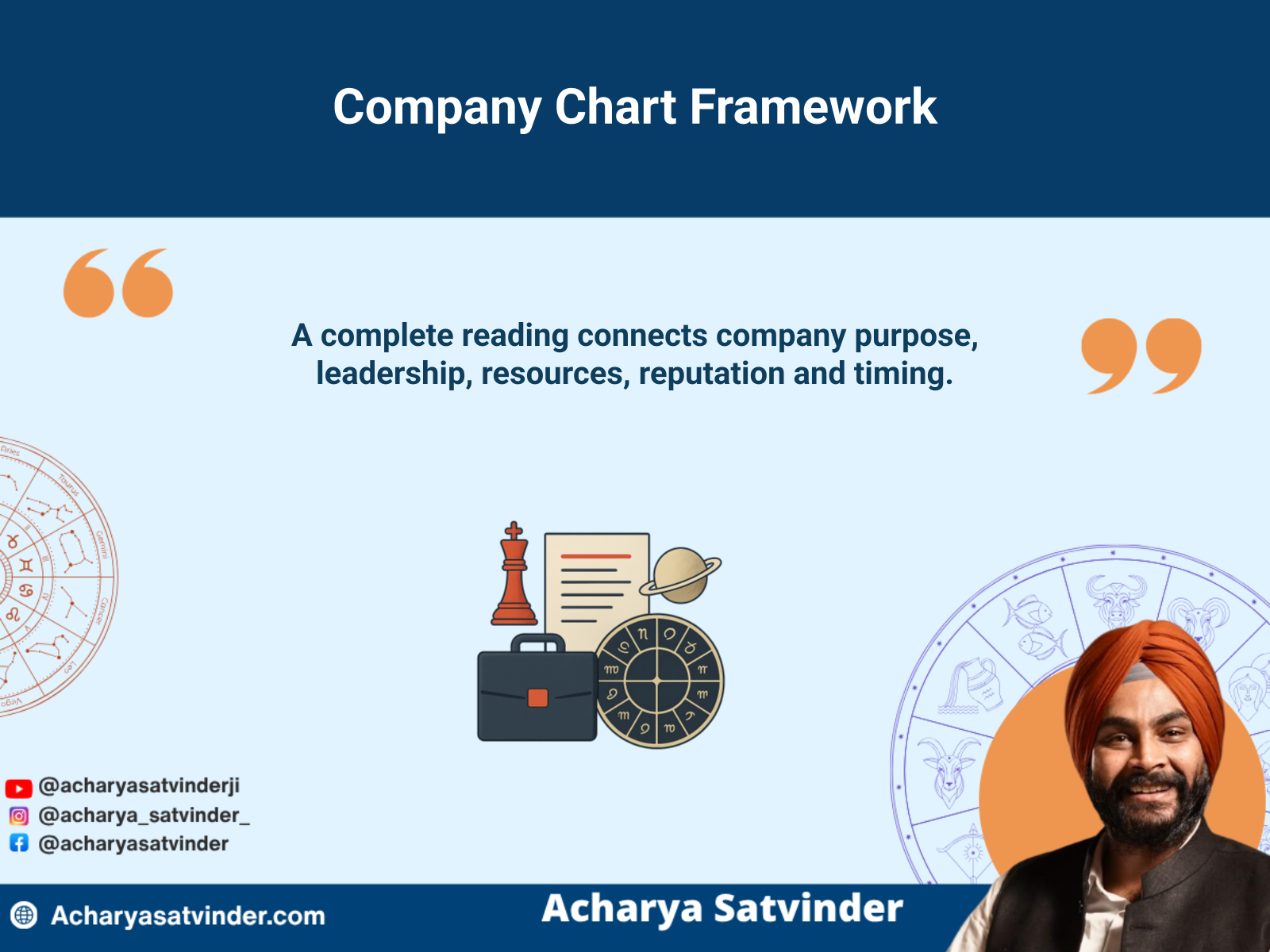
Depending on the question, the analysis may consider:
- The company’s core identity and commercial purpose
- Leadership style and decision-making patterns
- Cash management, assets and resource stability
- Sales, communication and contractual responsibilities
- Clients, partnerships and competitive pressures
- Workforce systems, service quality and daily operations
- Reputation, authority and long-term growth direction
No single placement can settle these matters. House lords, planetary strength, conjunctions, aspects, divisional support and active periods must be studied together.
The reading should also distinguish between potential and timing. A chart may show commercial ability, yet the active period may require consolidation, training or patient preparation before expansion.
Company chart and founder chart
The company chart describes the organization as an entity, while the founder’s Kundli describes personal capacity and timing. Comparing them can reveal alignment as well as manageable tension.
Corporate astrology meaning is incomplete if every business outcome is assigned only to the incorporation chart. Founders, executives and partners make choices through their own abilities, responsibilities and planetary periods.
A strong company phase may still be mishandled by unprepared leadership. Conversely, a disciplined leader may guide an organization carefully through a demanding corporate period.
The company chart shows the organizational pattern. Leadership charts show how decision-makers may respond to that pattern.
Birth information should be used only with consent and confidentiality. Team members should not face hiring, dismissal or promotion decisions based solely on astrological interpretation.
Planets and houses in business analysis
Business analysis connects several houses and planets rather than relying only on the tenth house. Each factor gains meaning from ownership, placement, strength, aspects and timing.

Important business houses
- First house: Company identity, vitality and overall direction
- Second house: Accumulated resources, financial habits and organizational voice
- Third house: Initiative, communication, marketing and enterprise
- Sixth house: Employees, service, routines, competition and disputes
- Seventh house: Clients, agreements, trade and business partners
- Tenth house: Authority, responsibility, reputation and public work
- Eleventh house: Gains, networks, objectives and commercial reach
Understanding how Vedic astrology houses and their lords work together prevents isolated conclusions. The sign occupying a house determines its lord, while that lord’s condition shows how the subject connects with the wider chart.
Planetary roles
The Sun may relate to authority and identity, while the Moon can reflect responsiveness and organizational climate. Mercury connects with trade and communication, whereas Saturn may describe structure, duty and endurance.
Jupiter can relate to judgement, counsel and expansion; Venus to value, relationships and appeal; and Mars to execution and competition. Rahu and Ketu require careful contextual analysis rather than automatic labels.
The house system also changes meaning according to the question. For contrast, traditional connections between houses and body areas belong to health-oriented interpretation, not corporate assessment.
A prominent planet may influence business activity, but the complete chart decides how that influence can operate.
How timing supports corporate decisions
Timing analysis examines when existing possibilities may become more active, demanding or visible. It supports preparation rather than guaranteeing a particular commercial result.
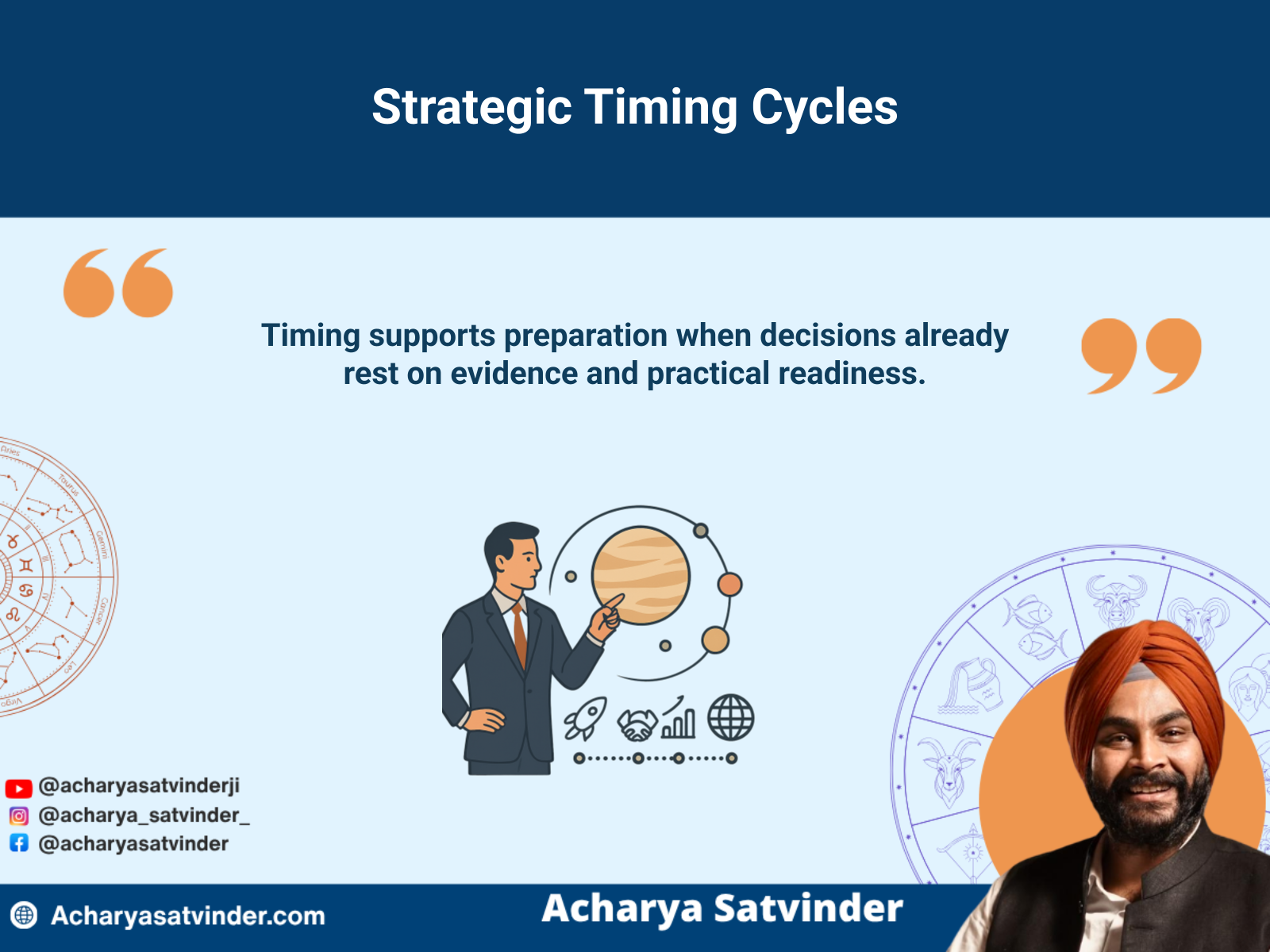
Vedic analysis may consider planetary periods in leadership charts, transits affecting relevant factors and the timing shown around a company’s major milestones. The chosen method should match the decision being studied.
Timing questions may involve:
- Registering or publicly launching a venture
- Signing an important agreement
- Entering a partnership or market
- Opening a branch or introducing a service
- Restructuring operations or leadership responsibilities
A supportive period cannot repair an unworkable contract or create demand where none exists. A demanding period does not require panic; it may call for stronger review, reserves and realistic expectations.
Good timing supports a prepared decision. It cannot substitute for a sound decision.
Practical uses for leaders and entrepreneurs
Corporate guidance is most useful when the question is narrow enough to examine properly. Clear concerns lead to more relevant chart analysis and practical discussion.
A leader might ask whether the current phase supports expansion or internal strengthening. Another may need clarity about partnership roles, communication problems, delayed growth or repeated operational strain.
- Clarifying whether consolidation or expansion deserves attention
- Understanding recurring friction between founders
- Reviewing personal readiness for independent responsibility
- Planning important actions with greater awareness
- Recognizing periods requiring patience and tighter oversight
Someone comparing employment with entrepreneurship may also review how business suitability is assessed through astrology. Such guidance still requires skills, capital, market understanding and disciplined execution.
Naam Simran, Daan, Seva and disciplined living may support inner steadiness when sincerely practised. They are conscious spiritual responses, not methods for escaping responsibilities or rewriting the life path.
Responsible limits of corporate astrology
Astrological guidance must remain proportionate to the decision and available evidence. It should encourage awareness without creating fear, dependency or false certainty.
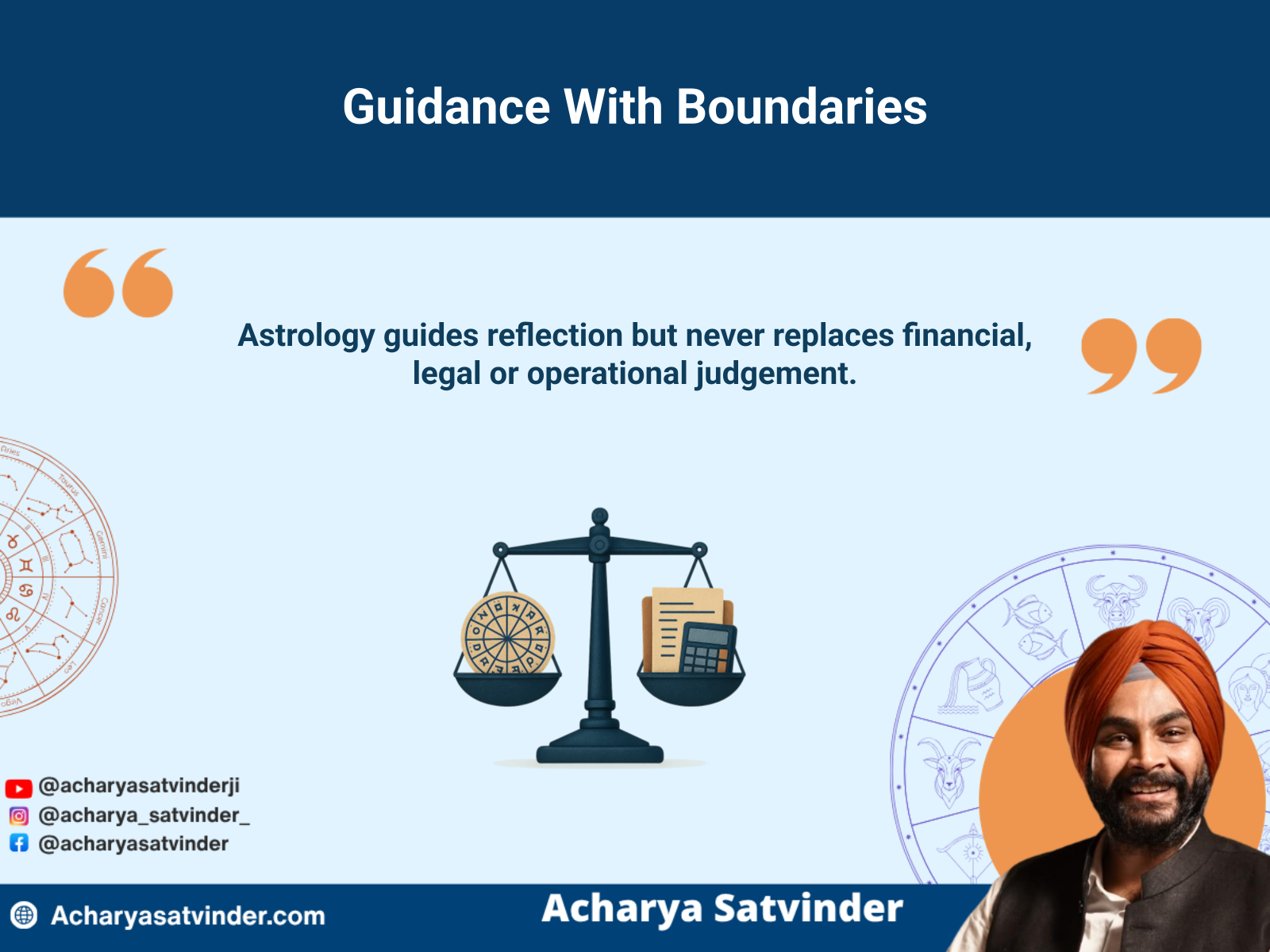
Understanding Corporate astrology meaning includes recognizing what it cannot do. It cannot guarantee revenue, remove business risk, replace due diligence or determine an employee’s professional worth.
Questions about whether Vedic astrology is more accurate and whether Vedic astrology can be wrong should be approached through method, data quality and interpretation rather than absolute claims.
An incorrect founding time can alter the Ascendant and house structure of a corporate chart. When only a date is known, the astrologer should state the limitation instead of presenting uncertain details as facts.
Legal, accounting, investment, employment and compliance matters require qualified professionals. Astrology may help frame timing and reflection, but evidence-based professional judgement must guide the final action.
Responsible astrology adds perspective without demanding obedience. The decision-maker remains accountable for choices and consequences.
Preparing for a corporate astrology reading
Accurate records and a focused question help produce a more coherent reading. Gather the available information without choosing dates merely because they appear more favourable.
Useful details can include:
- Official registration date, time and place
- Public opening or first transaction details
- Major restructuring or ownership-change dates
- Consenting founders’ birth information
- The exact decision or recurring concern
If several founding events exist, record each event and its purpose. The astrologer can then determine which chart is relevant and explain any uncertainty before interpretation begins.
FAQs
What is corporate astrology in simple words?
Corporate astrology applies astrological interpretation to a company and its major business events. It may also compare the organization’s chart with consenting founders or leaders.
Which date is used for a company astrology chart?
The legal registration moment is often considered, but a launch or first transaction may answer a different question. The selected event should be documented and clearly explained.
Can corporate astrology predict business success?
It may describe patterns, strengths, pressures and timing, but it cannot guarantee success. Market demand, leadership, capital, execution and external conditions remain essential.
Can astrology choose the best time to launch a business?
Astrological timing may help compare possible launch periods after practical preparations are complete. It cannot make an unsuitable plan commercially sound.
Does corporate astrology replace financial or legal advice?
No, it should never replace qualified financial, legal, employment or compliance guidance. It is an additional interpretive perspective for reflection and planning.
Final Words
Corporate astrology meaning is most useful when it brings structure to business questions without promising certainty. Complete-chart analysis, reliable records, practical evidence and disciplined leadership together support wiser planning.
Acharya Satvinder Ji’s approach keeps astrology focused on awareness, timing and responsible action. It guides a person to prepare for the path shown rather than expect the chart to replace effort or judgement.

Acharya Satvinder is a spiritual guide and life mentor who blends Sikh astrology, philosophy, and coaching to help you find clarity, balance, and purpose. He offers personalized guidance for career, relationships, stress, and spiritual growth — empowering you to unlock your true potential.
With over 20 years of experience, Acharya Satvinder is regarded as one of the most respected and Best astrologers in India for his ethical and disciplined approach. Each year, he guides more than 10,000 individuals through his teachings and consultations, including extensive one-to-one sessions with followers across India, Canada, USA and the global NRI community. His guidance explains discipline, conscious decision-making, seva, and inner clarity as the foundation of meaningful growth.




Pingback: Can i learn astrology online? A Practical Vedic Guide
Pingback: Astrology reading cost: Fees, Value and Booking Checklist