
Vedic astrology houses and body parts form a symbolic map connecting the twelve bhavas of a Kundli with different regions of the human body.
This correspondence helps an astrologer organise observations about constitution, vitality and periods requiring greater physical awareness. It is not a medical test or a substitute for professional healthcare.
Acharya Satvinder Ji approaches astrology as a guiding science for understanding planetary direction, timing and patterns shown from birth. This awareness supports disciplined planning; it does not rewrite fate.
How Vedic astrology houses and body parts connect
Each house represents a life area and a symbolic bodily region. The sequence generally moves downward from the head in the first house to the feet in the twelfth.
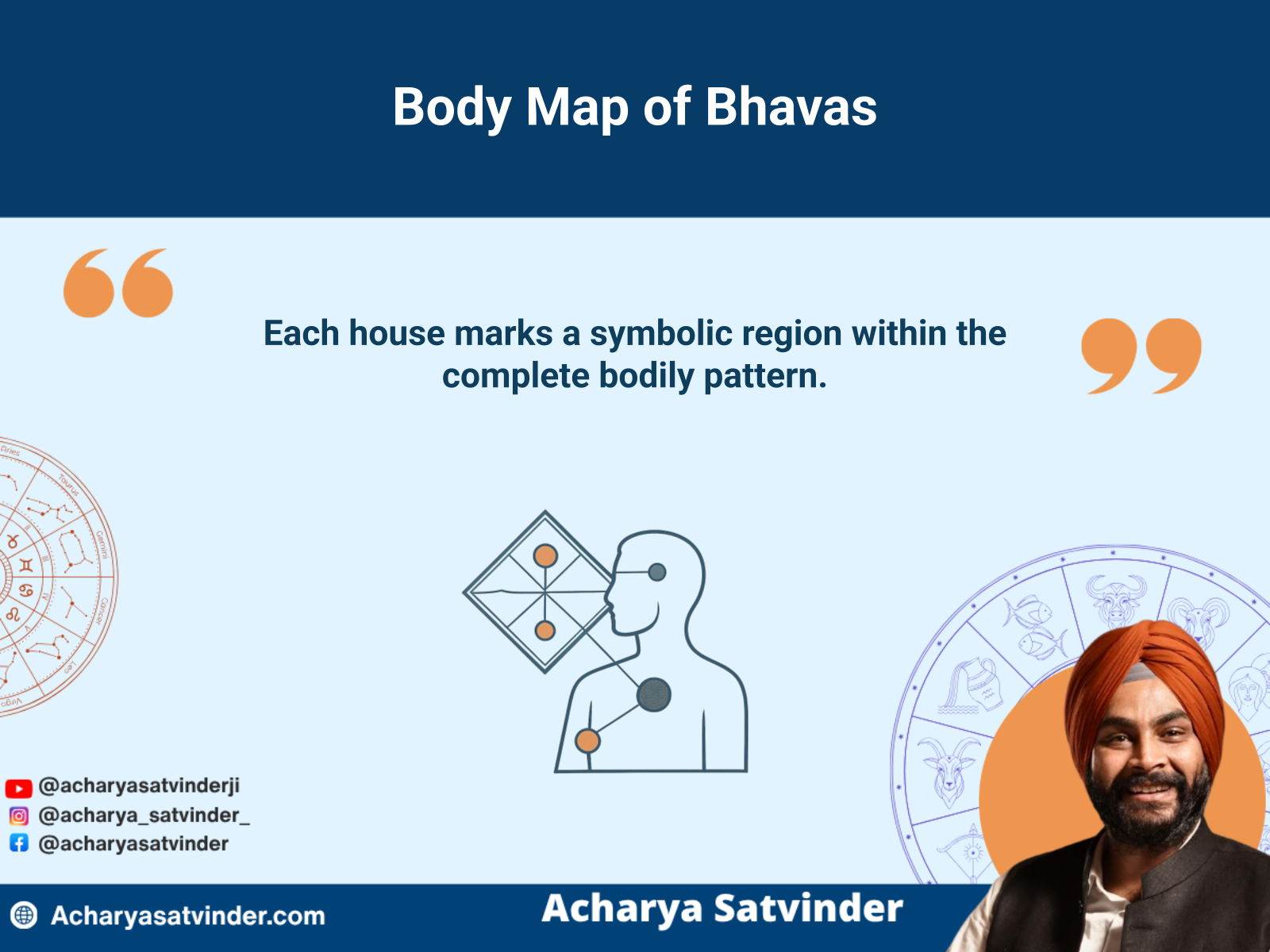
The Lagna, or Ascendant, establishes the first house and the complete house arrangement. Accurate birth time is therefore important when examining physical constitution or body-related indications.
The first house represents the body as a whole, while the remaining houses identify particular regions. Their lords connect those regions with other departments of life.
A house identifies the bodily area under consideration, but the complete chart describes its condition and timing.
Four layers should remain distinct during interpretation:
- House: The symbolic bodily region and related life department.
- House lord: The planet carrying that house’s concerns elsewhere in the Kundli.
- Sign: The anatomical quality added by the rashi occupying the house.
- Planet: The function influencing the house through placement, conjunction or aspect.
These layers may support, modify or challenge one another. A sound reading studies their combined pattern instead of turning one placement into a fixed conclusion.
House-by-house body correspondence
The following Vedic astrology houses and body parts list provides a practical reference for all twelve bhavas. It presents broad traditional correspondences rather than medical predictions.
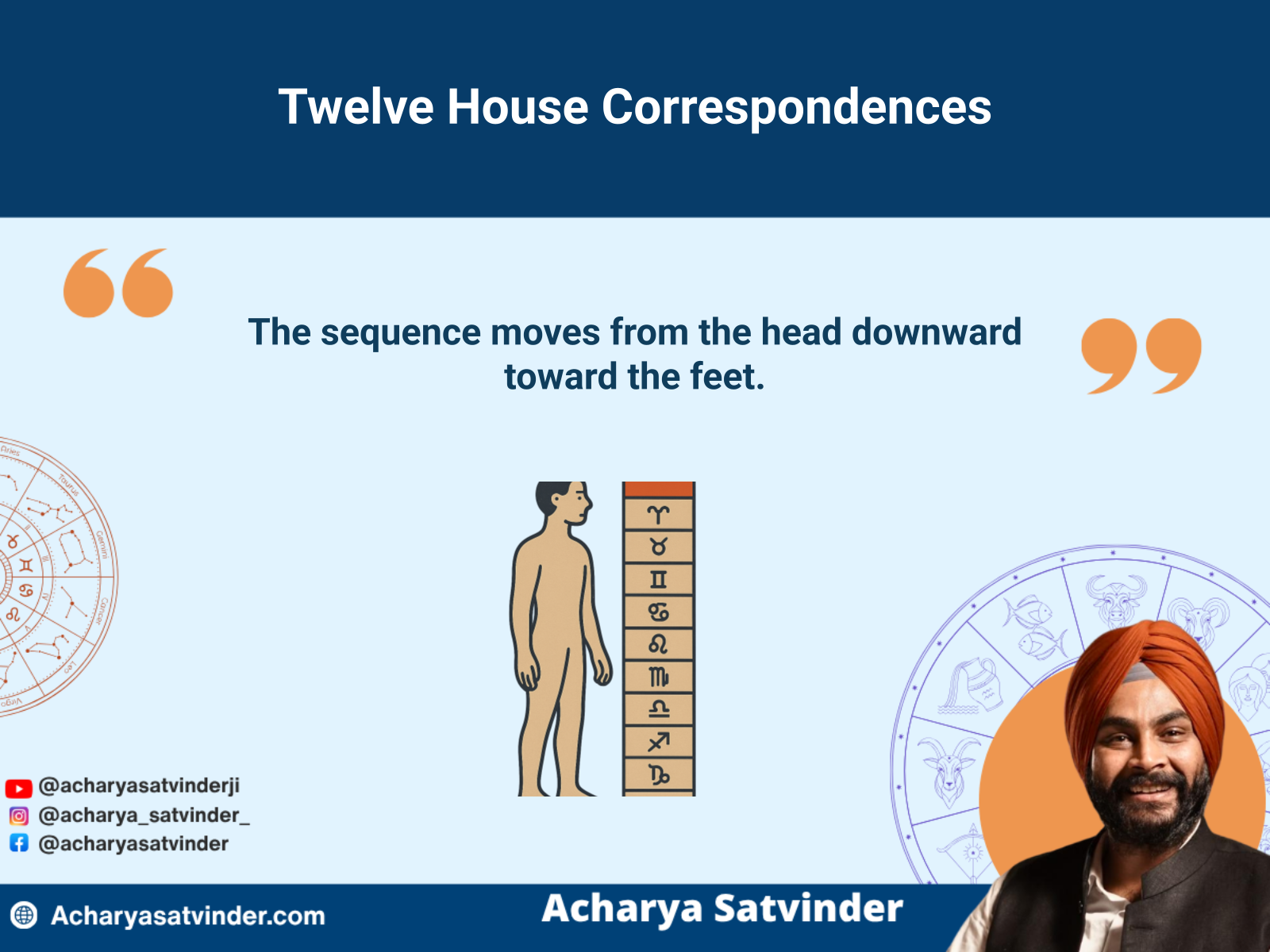
The sequence appears in classical Jyotisha literature, including Phaladeepika. Some lineages use slightly broader anatomical descriptions, especially for neighbouring or overlapping regions.
- First house — Head and overall body: Head, skull, general appearance, physical constitution, vitality and the body considered as one integrated system.
- Second house — Face: Face, mouth, teeth, tongue, speech organs and eyes, with additional assessment needed for left-right distinctions.
- Third house — Upper chest and arms: Shoulders, arms, hands, upper chest and the physical effort used in communication or skilled activity.
- Fourth house — Heart and chest: Heart region, chest, lungs and the sense of physical and emotional comfort associated with the inner self.
- Fifth house — Upper abdomen: Stomach, upper abdomen and digestive fire, alongside the house’s broader connection with intelligence and creative expression.
- Sixth house — Waist and intestines: Waist, lower digestive region and intestines. This house also helps assess illness, daily habits, recovery demands and competition.
- Seventh house — Pelvic region: Lower abdomen, pelvis and groin. It also represents partnership, agreements and interaction with others.
- Eighth house — Reproductive and elimination systems: Reproductive organs, elimination and vulnerable internal processes associated with longevity, sudden developments and transformation.
- Ninth house — Thighs and hips: Thighs and upper legs, supporting movement and the wider journeys symbolically connected with the ninth house.
- Tenth house — Knees: Knees, physical support during work and the capacity to carry duties represented by profession, action and public responsibility.
- Eleventh house — Calves and ankles: Calves, lower legs and ankles, supporting progress toward objectives, gains and participation within wider networks.
- Twelfth house — Feet: Feet and the body’s final contact with the ground, alongside themes of rest, sleep, release, seclusion and expenditure.
Neighbouring houses can describe overlapping areas, so anatomical boundaries should never be treated as rigid lines.
The first, sixth and eighth houses commonly receive attention during a health-oriented reading, while the twelfth may add themes of rest, isolation or hospital care. Their involvement alone does not establish illness.
Why a single house cannot diagnose health
A body correspondence is only the starting point for chart analysis. Reliable interpretation requires agreement among the house, its lord, planetary influences, strength and relevant timing periods.
For example, a planet occupying the sixth house does not automatically predict disease. Its ownership, dignity, associations, aspects and role for that particular Ascendant can significantly change the interpretation.
A responsible reading considers:
- The Lagna, Lagna lord and their strength.
- The relevant house and the condition of its lord.
- Planets placed in or aspecting that house.
- The natural significators connected with the concern.
- Active mahadasha, antardasha and important transits.
- Supporting divisional and drekkana indications where appropriate.
Repeated indications carry more interpretive weight than one isolated planet, sign or house.
The Sun, Moon, Mars, Mercury, Jupiter, Venus and Saturn may each contribute different bodily themes. Rahu and Ketu can also influence the picture through placement, conjunction and association.
Astrology may suggest periods for greater awareness, routine or medical follow-up. Only a qualified healthcare professional can diagnose symptoms, prescribe treatment or assess physical risk.
The role of signs and Kalapurusha
Houses and zodiac signs provide related but separate body maps. Kalapurusha symbolism assigns the twelve signs to a natural head-to-feet sequence beginning with Aries.
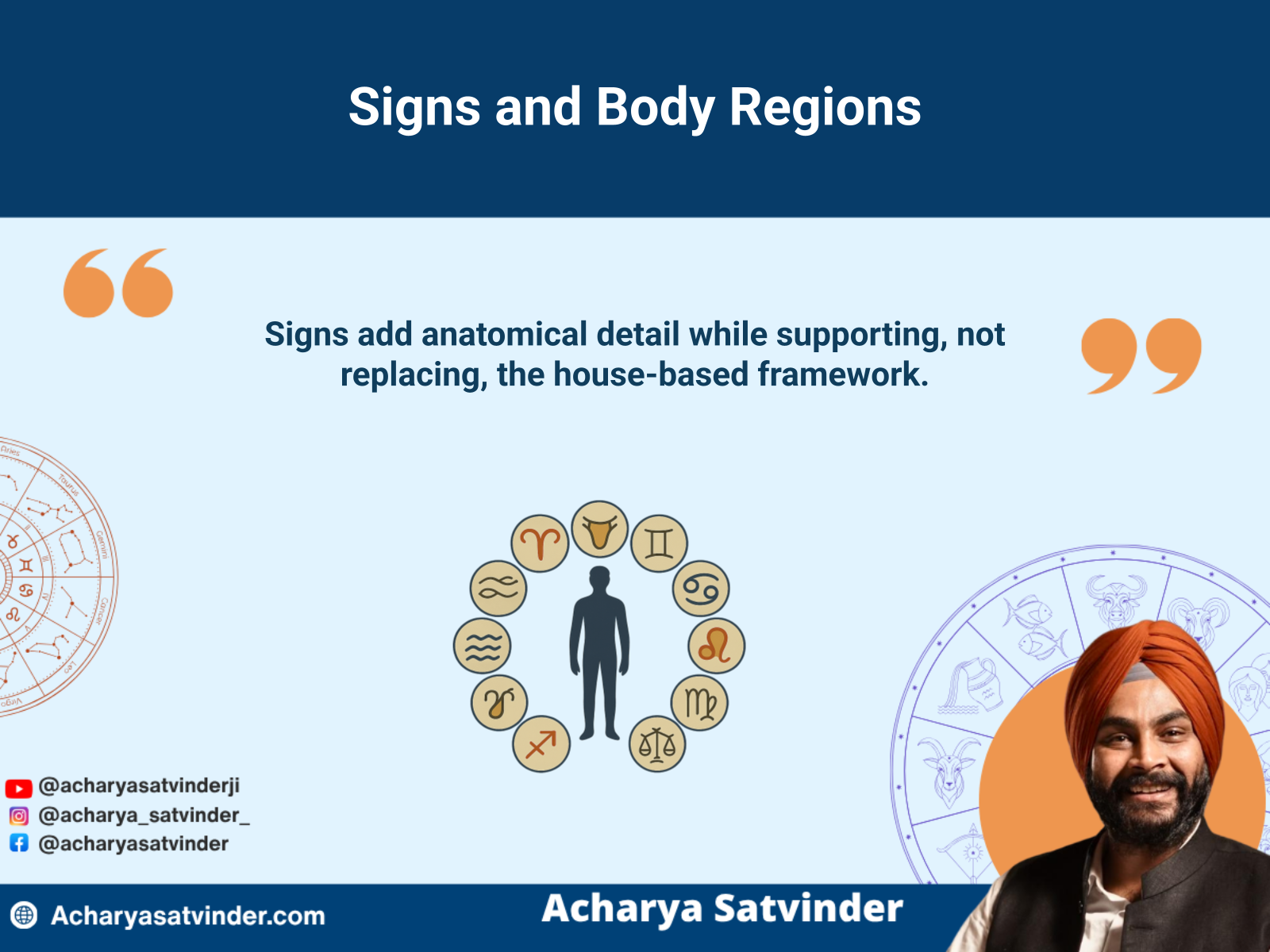
The sign occupying a house adds anatomical detail and a mode of expression. It does not cancel the house correspondence or become an independent diagnosis.
- Aries: Head and upper face.
- Taurus: Face, neck and throat.
- Gemini: Shoulders, arms and hands.
- Cancer: Chest and breast region.
- Leo: Heart, upper back and spine.
- Virgo: Abdomen and intestines.
- Libra: Lower back and pelvic balance.
- Scorpio: Reproductive and elimination regions.
- Sagittarius: Hips and thighs.
- Capricorn: Knees and structural support.
- Aquarius: Calves, ankles and circulation.
- Pisces: Feet and fluid balance.
The house names the region, while the sign adds another layer of anatomical symbolism.
Suppose Virgo occupies the fourth house in a hypothetical chart. The astrologer may examine both the fourth house’s chest and heart symbolism and Virgo’s abdominal themes, then study Mercury and all relevant influences.
How an astrologer reads a body-related concern
A structured method prevents rushed or fear-based conclusions. When Vedic astrology houses and body parts are studied together, interpretation moves from the whole constitution toward the specific concern.
A careful process usually follows these steps:
- Confirm the birth details: Verify the date, exact time and place used to calculate the Kundli.
- Assess the Lagna: Study the Ascendant, Lagna lord, planets in the first house and influences upon them.
- Locate the body region: Identify the house and sign traditionally connected with the area being discussed.
- Examine connected planets: Review the house lord, occupants, aspects, conjunctions and natural significators.
- Check repetition: Look for supporting indications elsewhere instead of depending on a single chart factor.
- Study timing: Consider dashas and transits to understand when an existing pattern may receive greater activation.
Timing activates possibilities already shown in the Kundli; it does not create an unrelated promise.
Imagine a person asking about recurring knee discomfort. The tenth house, its lord, the sign involved, Saturn’s condition and active periods may be reviewed, but medical examination remains essential.
The astrologer’s role is to explain patterns calmly and place them within the person’s wider responsibilities. Responsible guidance encourages timely action rather than anxiety or self-diagnosis.
Practical guidance for responsible use
Body correspondences are most useful when they encourage observation, preparation and disciplined habits. They become unhelpful when treated as certain disease labels or reasons to delay healthcare.
- Seek prompt medical attention for persistent, severe or unusual symptoms.
- Keep reports, prescriptions and test results organised for healthcare appointments.
- Maintain appropriate sleep, nutrition, movement and stress-management routines.
- Use astrological timing for awareness, not for abandoning professional advice.
- Avoid interpreting charts without accurate birth details and complete context.
Naam Simran, Daan, Seva and disciplined living may support patience, humility and inner steadiness. They are conscious spiritual responses, not methods for escaping the life path shown from birth.
Acharya Satvinder Ji advises combining planetary guidance with practical responsibility. Awareness has value when it leads to clearer decisions, steadier conduct and appropriate professional support.
FAQs
Which house represents the whole body in Vedic astrology?
The first house represents the overall body, constitution, appearance and vitality. Its lord and planetary influences must also be studied.
Can one weak house predict a disease?
No single house can establish a disease or medical outcome. The complete chart and professional medical assessment are both necessary.
Are house and zodiac-sign body correspondences the same?
They follow similar head-to-feet sequences but remain separate interpretive layers. The house identifies a region while the sign adds further symbolism.
Which houses are commonly examined for health concerns?
The first, sixth and eighth houses are commonly reviewed, with the twelfth adding relevant context. Their lords, planets and timing periods must support the interpretation.
Can a Kundli replace medical consultation?
A Kundli cannot replace medical diagnosis, testing or treatment. Consult a qualified healthcare professional whenever symptoms or health concerns arise.
Final Words
Used responsibly, Vedic astrology houses and body parts offer an organised way to understand traditional bodily symbolism within a Kundli. Their meaning becomes clearer when every relevant chart layer is considered together.
The house, its lord, sign, planets, aspects, strength and active dashas must form a connected picture. For physical concerns, astrological awareness should always accompany timely medical care and disciplined daily living.

Acharya Satvinder is a spiritual guide and life mentor who blends Sikh astrology, philosophy, and coaching to help you find clarity, balance, and purpose. He offers personalized guidance for career, relationships, stress, and spiritual growth — empowering you to unlock your true potential.
With over 20 years of experience, Acharya Satvinder is regarded as one of the most respected and Best astrologers in India for his ethical and disciplined approach. Each year, he guides more than 10,000 individuals through his teachings and consultations, including extensive one-to-one sessions with followers across India, Canada, USA and the global NRI community. His guidance explains discipline, conscious decision-making, seva, and inner clarity as the foundation of meaningful growth.




Pingback: Corporate astrology meaning: A Practical Vedic Guide
Pingback: Can i learn astrology online? A Practical Vedic Guide
Pingback: Health tendencies in kundli Vedic astrology Explained