Is indian astrology based on moon sign? The Moon sign is central to many Vedic methods, but it is never the only foundation of a complete reading.
Indian families often identify a person by rashi, which usually means the Moon’s zodiac sign at birth. This creates the impression that every interpretation begins and ends with the Moon.
In practice, the Moon is read alongside the ascendant, planets, houses, aspects, nakshatras and planetary periods. This balanced approach also helps when considering whether Indian astrology really works in practical life.
Is indian astrology based on moon sign? The short answer
Indian astrology gives the Moon sign an important interpretive role because it represents the mind, emotional reception and inner response. However, the complete birth chart remains the primary framework.
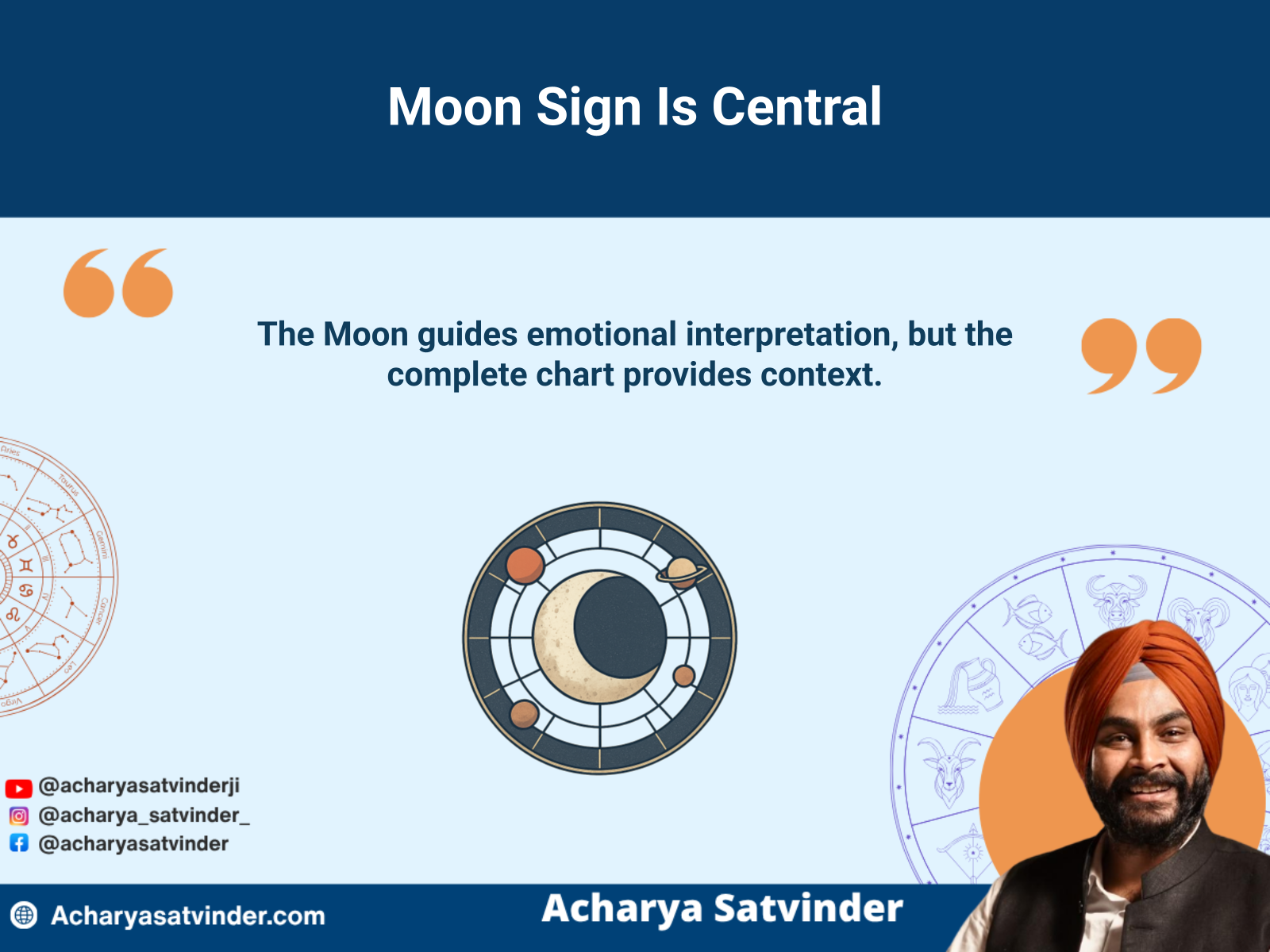
The Moon sign, commonly called Chandra Rashi or Janma Rashi, is the sidereal zodiac sign occupied by the Moon at birth. It describes how experiences may be mentally and emotionally processed.
The question Is indian astrology based on moon sign? often arises because daily rashifal, traditional naming customs, compatibility checks and major transit discussions frequently use the natal Moon as their reference.
The Moon is a powerful reference point, not a substitute for the complete kundli.
In Acharya Satvinder Ji’s approach, astrology is a guiding science for understanding direction, timing and life patterns shown from birth. It supports informed planning and disciplined action rather than rewriting fate.
Why the Moon sign has a central role
The Moon has practical importance because it represents the mind’s experience of life. Its sign, nakshatra, strength and planetary connections help describe emotional patterns and changing perceptions.
Several familiar Vedic astrology methods are connected with the Moon, which explains its visibility in everyday astrology:
- Janma Rashi identifies the zodiac sign occupied by the natal Moon.
- Janma Nakshatra identifies the lunar mansion occupied by the Moon.
- Chandra Lagna treats the Moon sign as a temporary first house.
- Vimshottari dasha begins from the lord of the Moon’s birth nakshatra.
- Many transit traditions count planetary movement from the natal Moon.
These methods do not make the Moon the sole ruler of the chart. They provide additional perspectives that must agree with the ascendant chart, relevant house lords and active timing periods.
The Moon describes how life is received internally, while the full chart shows where events develop.
A well-supported Moon can indicate emotional steadiness within the astrological tradition, while a pressured Moon may show greater mental sensitivity. Neither conclusion should be declared without studying sign strength, aspects, conjunctions and timing.
Moon sign, Sun sign and Lagna are different
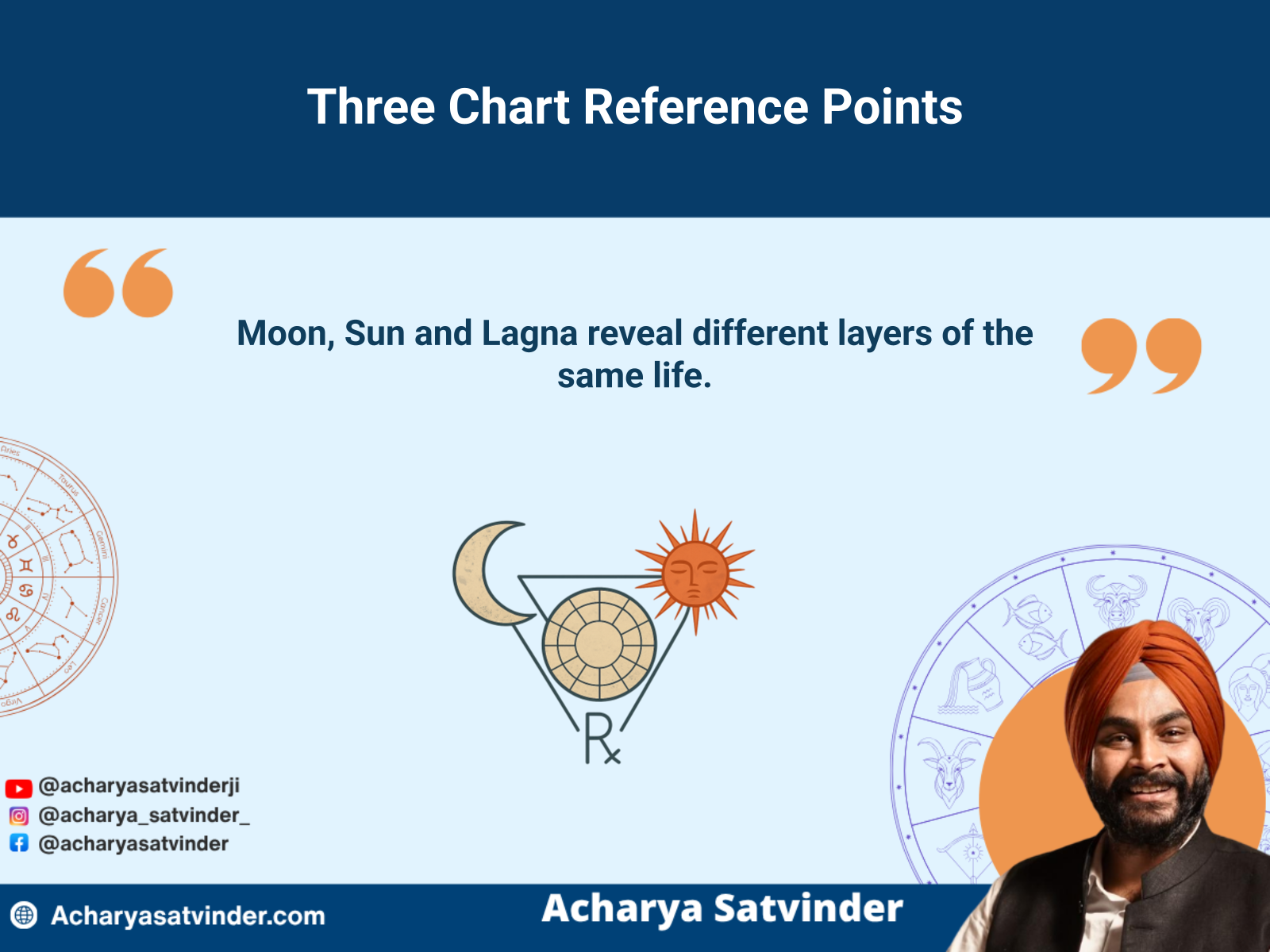
The Moon sign, Sun sign and Lagna answer different questions within a birth chart. Confusing them can lead to broad conclusions that overlook the chart’s structure and individual timing.
Moon sign
The Moon sign concerns the inner mind, emotional habits, memory, receptivity and instinctive reactions. It also provides the starting reference for several nakshatra, compatibility and transit techniques.
Lagna or ascendant
Lagna is the zodiac sign rising at the eastern horizon for the recorded time and place of birth. It establishes the house structure and connects planetary placements with specific areas of life.
Sun sign
The Sun sign relates to vitality, identity, purpose, authority and the ability to express personal direction. It remains important, although popular Indian rashifal is frequently organized by Moon sign.
A better answer to the Moon-sign question appears when these three reference points are treated as complementary lenses. Repeated indications across them generally carry more interpretive weight than an isolated placement.
Moon, Sun and Lagna reveal separate layers of one life, not competing identities.
How a complete Vedic chart is actually read
A responsible reading brings multiple chart factors together before reaching a conclusion. A complete answer to Is indian astrology based on moon sign? therefore requires more than identifying one rashi.
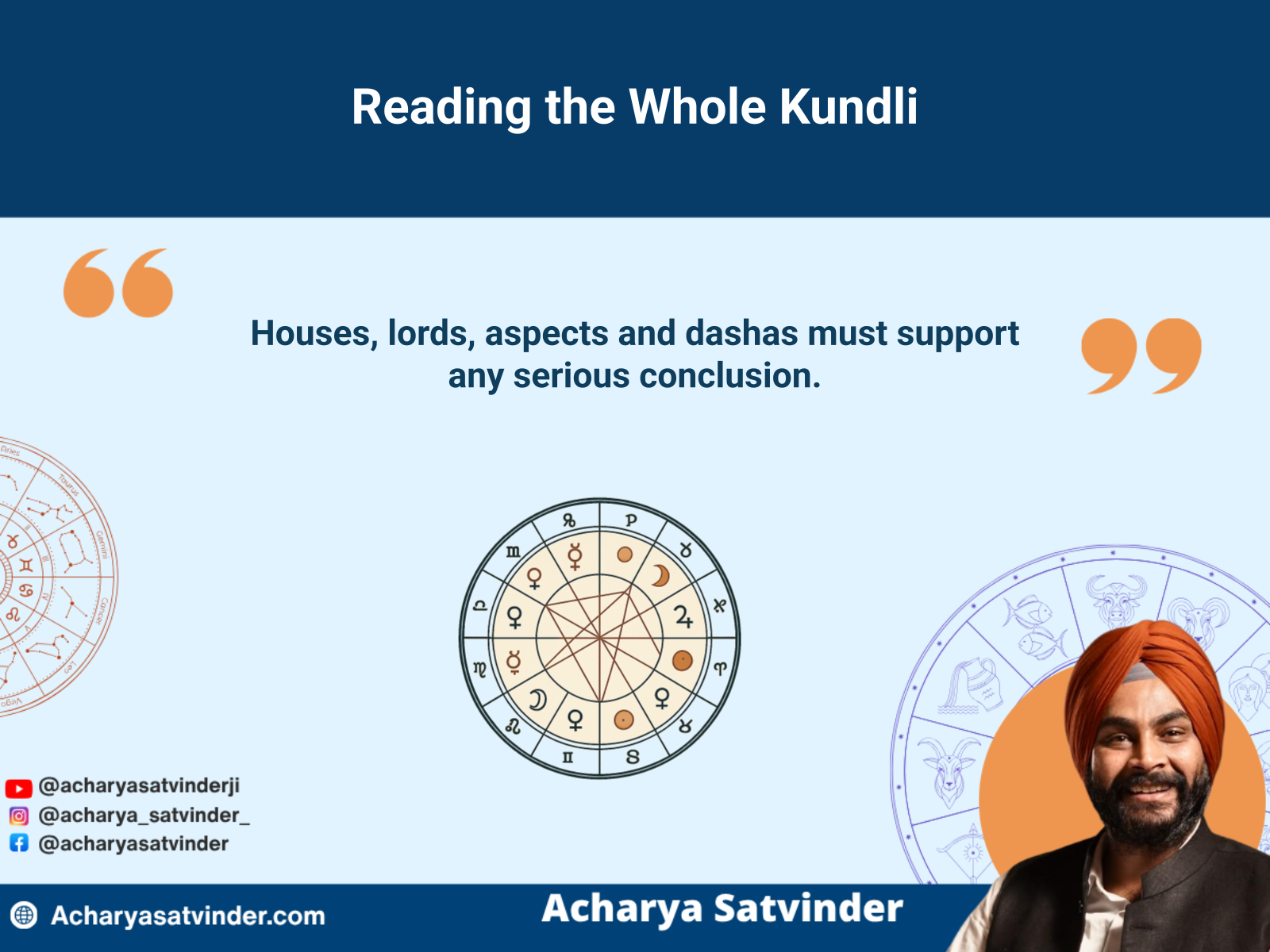
The astrologer begins with the ascendant and studies the relevant houses, their lords and the planets influencing them. The Moon is then assessed within that larger network rather than interpreted separately.
- The Lagna and strength of its ruling planet
- Planets occupying or aspecting the relevant houses
- House lords and their sign placement
- The Moon’s sign, nakshatra, degree and associations
- Applicable divisional charts for the question
- Mahadasha, antardasha and current planetary transits
Consider a hypothetical person with a sensitive Moon placement but strong support from its dispositor and other helpful chart factors. Reading only the Moon could exaggerate difficulty, while the complete chart may show resilience and sound judgment.
This full-chart principle also applies to specialized branches such as corporate astrology and organizational timing. Business decisions, leadership patterns and professional cycles cannot be reduced to one lunar placement.
Readers wishing to understand the method can follow a structured approach to learning astrology online. Beginning with planets, signs, houses and house lords creates a stronger foundation than memorizing isolated predictions.
No planet, sign or house should produce a final conclusion without supporting chart evidence.
When the Moon sign is commonly used
The Moon sign is especially useful when the question concerns emotional experience, mental response or widely practised lunar techniques. Its value depends on the purpose and depth of the reading.
General rashifal and transit discussions often use the natal Moon because it offers a shared reference for describing how changing planetary conditions may be experienced mentally and emotionally.
For relationships, Moon sign compatibility for marriage can reveal emotional rhythm and instinctive comfort. A serious assessment must also examine the seventh house, its lord, Venus, Jupiter, relevant divisional factors and timing.
Vimshottari dasha is linked more precisely with the Moon’s nakshatra than with its sign alone. The Moon’s exact position determines the opening planetary period and the remaining balance operating at birth.
Chandra Lagna can provide a secondary house framework by treating the Moon’s sign as the first house. Results become more meaningful when indications from this viewpoint repeat patterns already visible from the birth ascendant.
Repeated patterns build confidence; isolated placements should invite questions rather than certainty.
Can you rely on Moon sign without birth time?
A Moon sign can sometimes be identified when the birth time is uncertain because the Moon remains in one sign for roughly two and a quarter days. Boundaries still require caution.
If the Moon changed signs during the birth date, even a few hours can determine which rashi applies. Exact timing also improves the calculation of the Moon’s degree, nakshatra, pada and initial dasha balance.
The larger problem is that Lagna changes much faster than the Moon. Without a dependable birth time, the house structure and house lord relationships may remain uncertain, limiting detailed conclusions about career, marriage or property.
A Moon-based reading may offer provisional insight, but it should be clearly presented as limited. Responsible guidance distinguishes between what the available birth data supports and what remains uncertain.
A practical way to use your Moon sign
Your Moon sign can support self-observation when it is used as one part of a complete chart. The purpose is awareness, preparation and better decision-making rather than dependence on predictions.
- Confirm your birth date, recorded time and birthplace before calculating the chart.
- Identify both the Moon sign and Moon nakshatra instead of confusing them.
- Study the Moon’s lord, house placement, aspects and planetary associations.
- Compare Moon-based indications with Lagna, house lords and relevant divisional charts.
- Check whether the active dasha and transits support the same theme.
If personal guidance is needed, understand the scope and consultation fees before booking. Prepare accurate birth details and specific questions so the discussion remains focused, practical and transparent.
Acharya Satvinder Ji advises using planetary understanding to plan with awareness and discipline. Naam Simran, Daan, Seva and responsible living may support inner steadiness as conscious responses, not as methods for changing the life path.
Use the Moon sign to recognize emotional habits, then compare that insight with real circumstances and sound judgment. Astrology should support thoughtful action, never replace practical evidence or professional advice.
FAQs
Is the Moon sign more important than the Sun sign in Indian astrology?
The Moon sign is often more central for mental patterns, nakshatra-based timing, compatibility and many transit readings. However, the Sun, Lagna, house lords, planetary strength and dashas remain essential.
Can two people with the same Moon sign have different lives?
Yes, their ascendants, houses, planetary degrees, aspects, nakshatras and dashas may be completely different. A shared Moon sign describes only one layer of their charts.
Do I need an exact birth time to find my Moon sign?
Not always, because the Moon usually remains in one sign for more than two days. Accurate timing becomes important near sign boundaries and for calculating the nakshatra, pada, Lagna and dasha balance.
Are rashi and nakshatra the same thing?
No, rashi is the zodiac sign occupied by the Moon, while nakshatra is its smaller lunar division. Both use the Moon’s birth position but serve different interpretive purposes.
Can the Moon sign alone predict marriage or career?
No, those subjects require the relevant houses, house lords, planets, aspects, divisional charts and active dashas. The Moon sign may add emotional context but cannot provide a complete conclusion alone.
Final Words
So, Is indian astrology based on moon sign? Yes, the Moon sign is a major reference for the mind, nakshatra-based timing, compatibility and several transit methods, but it is not the entire system.
Clear guidance comes from combining the Moon with Lagna, planets, houses, house lords, aspects, divisional charts and dashas. The complete kundli provides context, while disciplined choices determine how wisely that guidance is used.

Acharya Satvinder is a spiritual guide and life mentor who blends Sikh astrology, philosophy, and coaching to help you find clarity, balance, and purpose. He offers personalized guidance for career, relationships, stress, and spiritual growth — empowering you to unlock your true potential.
With over 20 years of experience, Acharya Satvinder is regarded as one of the most respected and Best astrologers in India for his ethical and disciplined approach. Each year, he guides more than 10,000 individuals through his teachings and consultations, including extensive one-to-one sessions with followers across India, Canada, USA and the global NRI community. His guidance explains discipline, conscious decision-making, seva, and inner clarity as the foundation of meaningful growth.