
Vedic astrology original books are the classical source texts behind many principles used to interpret planets, houses, yogas, dashas and timing. They are valuable, but they require context rather than mechanical reading.
An old publication is not automatically an original source. It may be a translation, commentary, compilation or edited version based on manuscripts that differ in wording and arrangement.
A serious learner therefore needs two things: a dependable reading list and a method for studying it. The goal is not memorising dramatic predictions, but understanding how connected chart factors create meaning.
Learn Vedic Astrology Online
Yes, you can learn Vedic astrology online when the learning is structured, practical, and guided by authentic principles. A serious study of astrology helps you understand how planetary positions at birth indicate the direction and timing of important areas of life such as career, marriage, health, relationships, and business. The purpose is not to change fate through superstition, gemstones, or shortcuts, but to understand planetary influences with greater clarity and use that knowledge to make wiser life decisions.
If you are interested in learning Vedic astrology through a disciplined and spiritually grounded approach inspired by the teachings of Acharya Satvinder Ji, you can contact our team to know more about guidance and learning opportunities.
Contact Us to Learn AstrologyWhich Vedic astrology original books should you read first?
Begin with texts that explain the main structure of natal astrology and planetary judgment. Then add specialised works after houses, signs, aspects, strength and dasha principles are familiar.
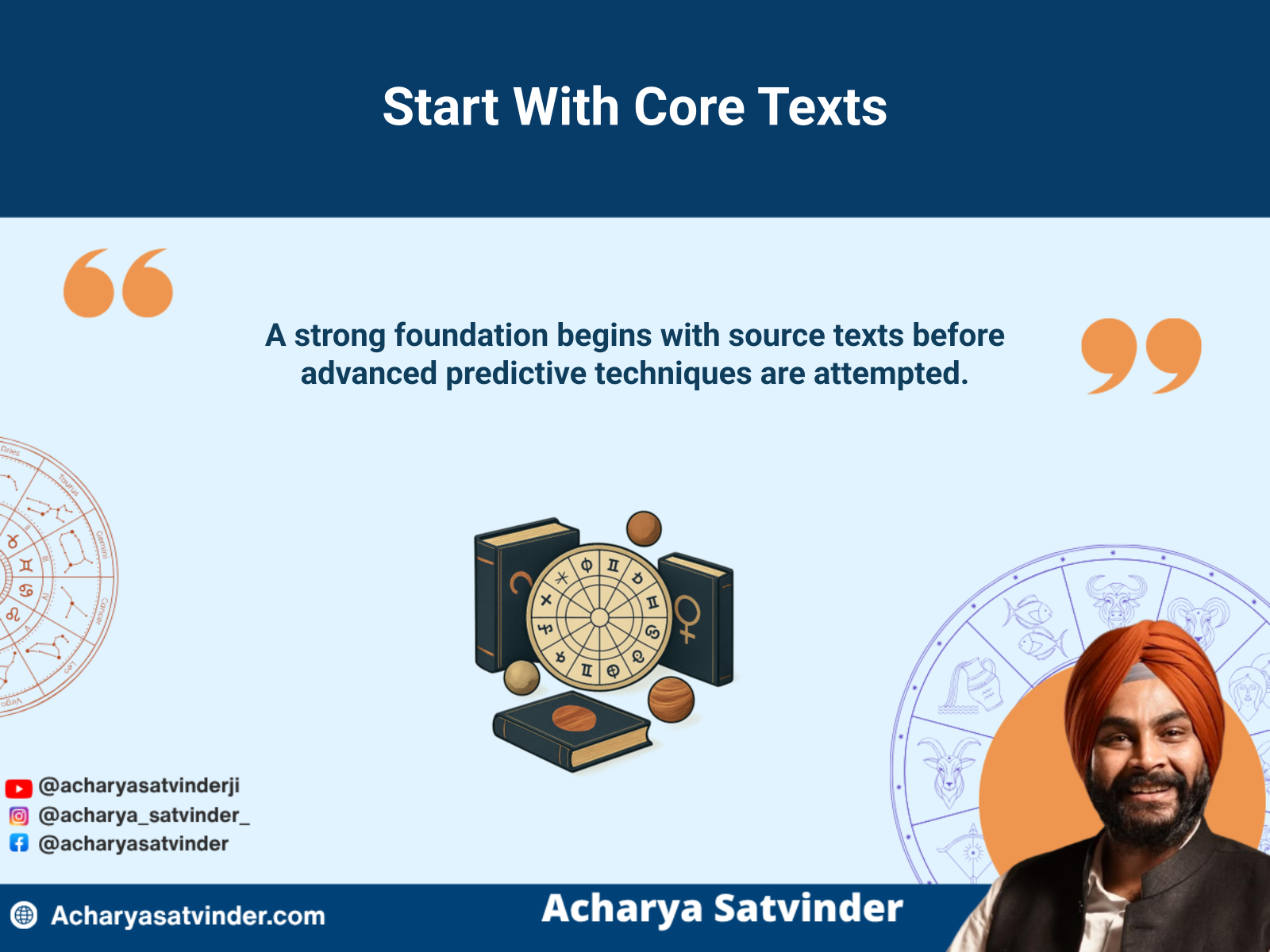
A balanced starting shelf contains one broad foundation, one concise synthesis and one practical predictive work. This combination reveals both the shared principles and the differences between classical approaches.
- Brihat Parashara Hora Shastra: A broad traditional foundation covering planets, houses, divisional charts, yogas, dashas and predictive principles.
- Brihat Jataka: A compact but demanding work that presents natal combinations, planetary conditions and chart interpretation with remarkable economy.
- Phaladeepika: A practical synthesis useful for studying houses, combinations, planetary results, livelihood, longevity and important life patterns.
The wider Jyotisha tradition also includes calculation, calendar and timing literature. Some foundational works are historically important without being step-by-step manuals for natal chart interpretation.
The oldest-looking edition is not always the most useful. A clear, traceable and carefully edited text usually serves the learner better.
What Original Really Means
When readers ask for Vedic astrology original books, they usually want teachings close to the classical source. The important distinction is whether they are reading a source text, edited version, translation or interpretation.
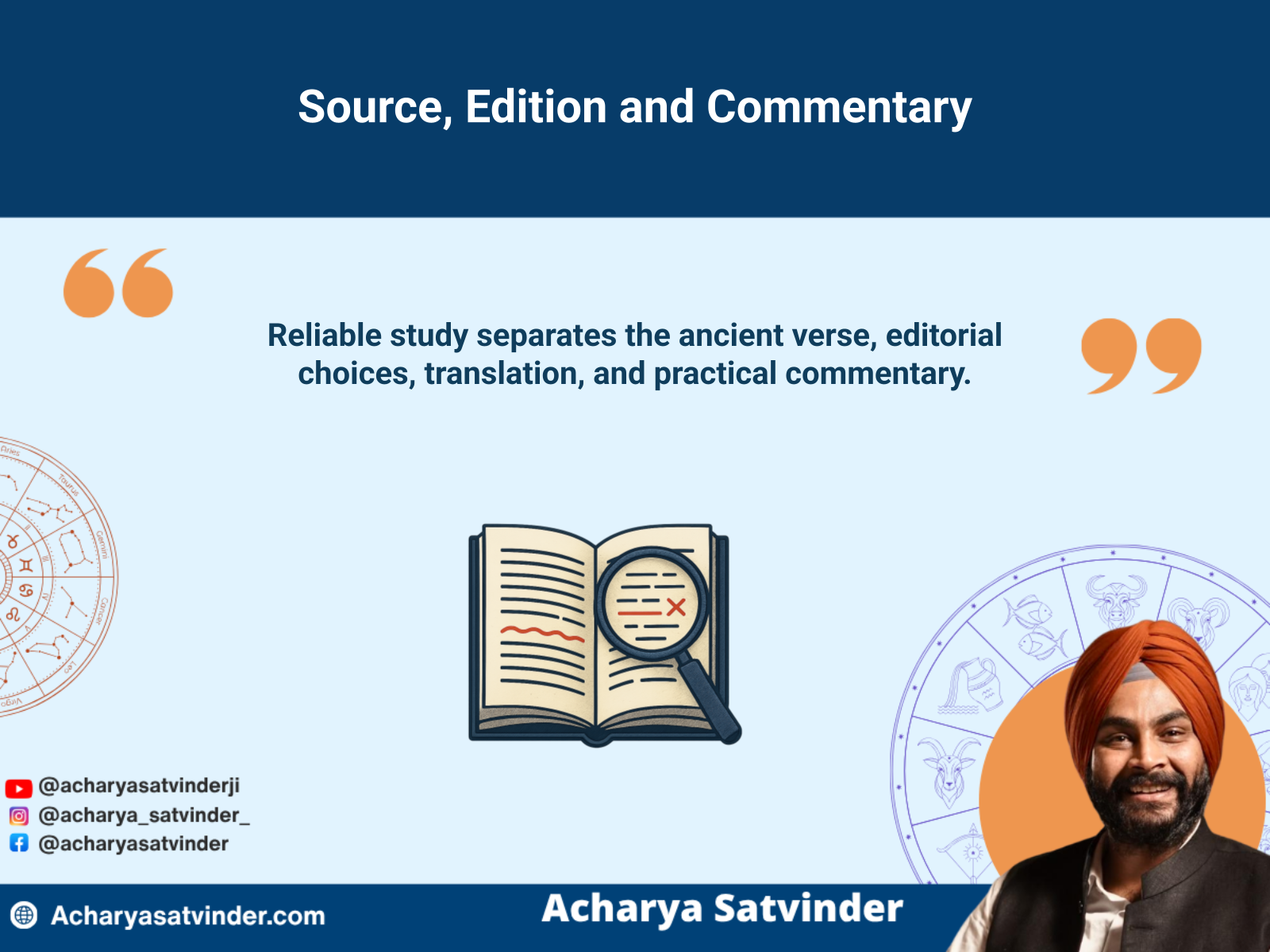
- Manuscript witness: A handwritten copy belonging to a particular line of transmission.
- Edited source text: A prepared version created by comparing one or more available copies.
- Translation: A rendering of the verses into wording accessible to a different group of readers.
- Commentary: An explanation that supplies definitions, calculations, examples and interpretive reasoning.
These forms are not interchangeable. A translation may simplify a technical term, while a commentary may introduce the editor’s preferred school, calculation method or practical assumptions.
The traditional attribution and textual history of Brihat Parashara Hora Shastra require particular care. Chapter order and available content can vary, so difficult passages should be compared across dependable editions.
A translation provides access, but commentary provides a viewpoint. Responsible study learns to recognise the difference.
Core Classical Texts and Their Uses
No single book contains every method needed for every astrological question. Each classical work has a distinct scope, style and level of difficulty.
Brihat Parashara Hora Shastra
This is commonly treated as a broad foundation for the Parashari approach. It discusses planetary qualities, houses, divisional charts, yogas, dashas and several layers of natal interpretation.
Brihat Jataka
Varahamihira’s compact work rewards slow reading because its verses carry dense technical meaning. It is especially valuable for planetary conditions, combinations, signs and the disciplined synthesis of a horoscope.
Saravali
Saravali offers extensive material on planets in signs and houses, planetary combinations and chart-based results. Its detailed classifications make it useful after the basic framework has become familiar.
Phaladeepika
Phaladeepika presents predictive principles in a comparatively organised form. Students often use it to deepen their understanding of houses, yogas, profession, relationships, health patterns and planetary periods.
Jataka Parijata and Sarvartha Chintamani
These larger compendiums bring together numerous earlier principles and detailed predictive rules. They are better used for cross-reference than as the learner’s first exposure to astrology.
Jaimini Sutras
The Jaimini framework uses specialised concepts and extremely concise statements. It should be studied with a reliable commentary and should not be casually blended with another system before both approaches are understood.
Specialised Classical Works
Prashna Marga supports question-based analysis, while Muhurta Chintamani concerns selecting suitable timing. Other works address annual charts, calculation, combinations or narrower predictive subjects requiring separate preparation.
Classical books provide rules, but mature judgment connects those rules without forcing agreement between unrelated methods.
A Sensible Reading Order for Beginners
A useful path through Vedic astrology original books moves from chart grammar to interpretation and then timing. It prevents advanced combinations from being memorised without understanding their conditions.
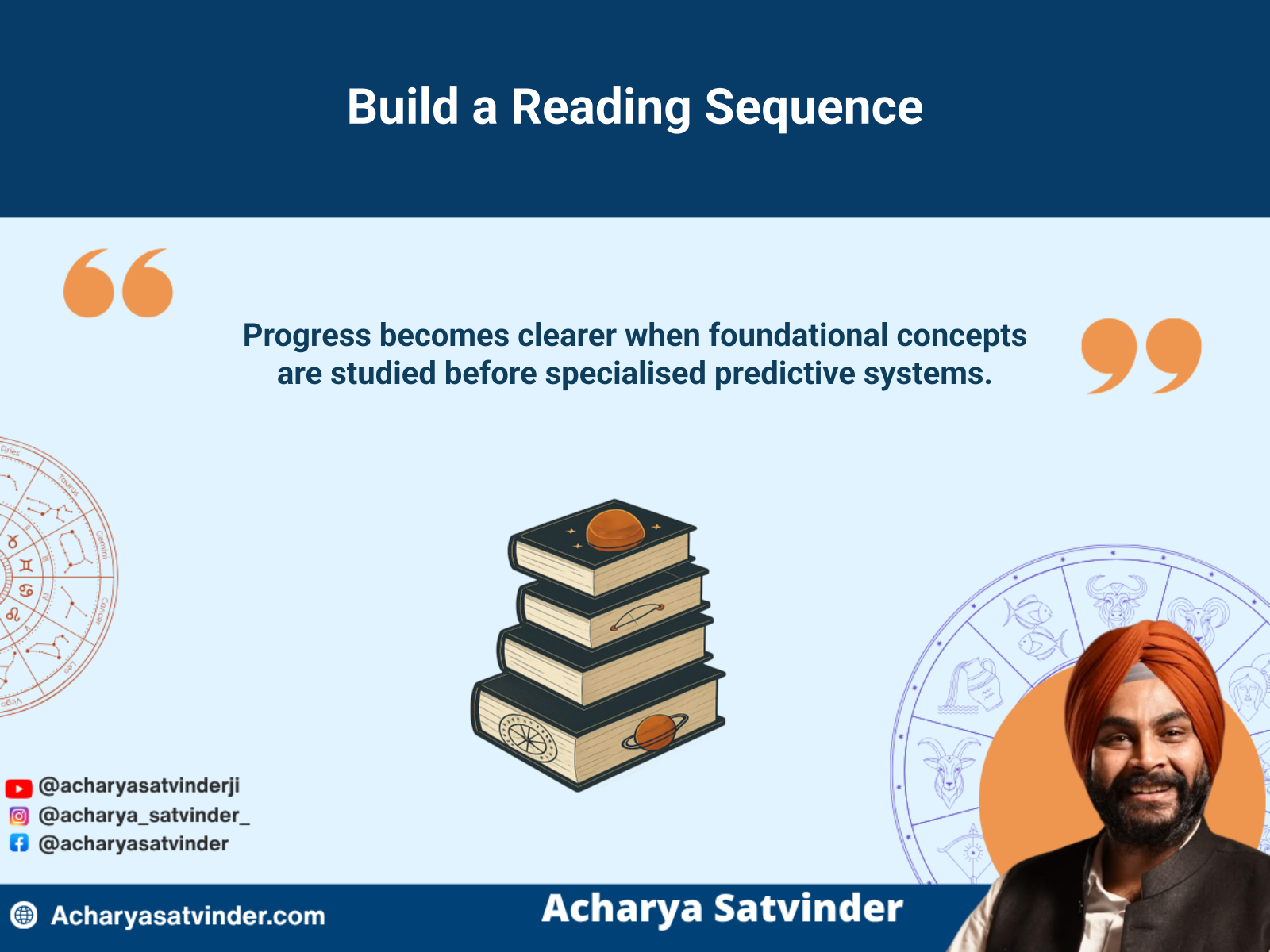
- Learn chart structure. Study signs, houses, planets, aspects and house lordship before attempting detailed predictions.
- Understand planetary condition. Examine dignity, strength, conjunctions, aspects, functional roles and the support or pressure surrounding each planet.
- Study houses as connected themes. A house should be read with its lord, occupants, aspects, relevant divisional chart and supporting houses.
- Add dashas and transits. A natal promise and the timing of its activation are separate questions that must be connected carefully.
- Compare principles with complete charts. Keep notes on when a rule applies, what modifies it and why a literal interpretation may fail.
If you are considering to get guide or whether astrology can be learned online should choose structured teaching rather than disconnected predictions. Digital access is useful when it supports regular study, chart practice and correction.
If you have more Questions about whether Vedic astrology is more accurate become clearer after the method and standard of interpretation are defined.
Learning order matters because advanced rules cannot correct a weak understanding of basic chart structure.
How to Study Without Misreading Rules
Classical statements are frequently brief, conditional and written for readers who already understand the surrounding doctrine. Good study restores that missing context before applying a verse.
Never declare a result from one isolated planet, sign, house or yoga. The complete chart, house lords, planetary strength, aspects, divisional support, dashas and relevant timing must be considered together.
Suppose a learner finds a difficult statement about Saturn in a particular house. It remains incomplete until Saturn’s lordship, dignity, aspects, conjunctions, dasha role and the condition of that house are examined.
This is also why astrological interpretation can be wrong when birth data, calculations or context are weak. A classical quotation cannot compensate for an incorrectly prepared chart or rushed judgment.
When principles are applied to present-day work settings, a clear explanation of corporate astrology meaning shows how traditional indicators can address modern questions without abandoning whole-chart judgment.
A verse becomes responsible guidance only after its conditions, exceptions and timing are understood.
Choosing a Reliable Edition
The value of Vedic astrology original books depends partly on the quality of the edition being read. A dependable copy should make the source, editorial method and explanatory additions reasonably clear.
- Look for clearly separated source verses, translation and commentary.
- Check whether technical terms remain consistent throughout the book.
- Prefer editions that explain calculations instead of presenting unexplained results.
- Notice whether missing, disputed or differently arranged passages are acknowledged.
- Avoid versions filled with absolute claims but lacking chart context or interpretive reasoning.
When possible, compare the same chapter in two respected editions. Differences can reveal where a conclusion comes from the source verse and where it depends on translation or commentary.
How Classical Books Support a Real Reading
Classical books give an astrologer a disciplined framework rather than a collection of fixed predictions. They become useful when the principles are applied to the person’s complete birth chart and actual concern.
Acharya Satvinder Ji approaches astrology as a guiding science for understanding planetary direction, timing and life patterns shown from birth. Its purpose is awareness, preparation and disciplined action, not the rewriting of fate.
Naam Simran, Daan, Seva and disciplined living may support a conscious response to difficult periods. These practices encourage steadiness and responsibility rather than promising a different predetermined life path.
A practical comparison of Vedic and Western astrology can also clarify why their terminology and chart logic should not be mixed casually.
FAQs
Which classical astrology book is best for a beginner?
Begin with a clear foundational guide to chart structure before approaching dense classical verses. Brihat Parashara Hora Shastra, Brihat Jataka and Phaladeepika can then be studied gradually with dependable commentary.
Are printed translations the same as the original texts?
No, a translation presents an editor’s rendering of the source verses. Commentary may add definitions, examples and interpretive choices that are not part of the verse itself.
Is Vedanga Jyotisha a complete natal astrology manual?
It is foundational to the wider history of astronomical calculation and calendrical knowledge. It is not a step-by-step manual for houses, yogas, divisional charts and natal prediction.
Can one classical verse predict a life event?
One verse is rarely sufficient for a responsible conclusion. House lords, strength, aspects, dashas, divisional charts and relevant timing must support the interpretation.
How should I study Vedic astrology original books?
Use Vedic astrology original books as structured sources, then test each principle against complete charts and sound timing methods. Study with guidance, record observations and avoid rigid conclusions from isolated lines.
Final Words
The classical literature of astrology is deep, layered and sometimes textually complex. A careful learner begins with foundations, compares dependable editions and tests every principle within complete chart context.
Approach Vedic astrology original books as sources of disciplined study rather than shortcut prediction. With patient reading and responsible guidance, they can deepen awareness of planetary direction, timing and recurring life patterns.

Acharya Satvinder is a spiritual guide and life mentor who blends Sikh astrology, philosophy, and coaching to help you find clarity, balance, and purpose. He offers personalized guidance for career, relationships, stress, and spiritual growth — empowering you to unlock your true potential.
With over 20 years of experience, Acharya Satvinder is regarded as one of the most respected and Best astrologers in India for his ethical and disciplined approach. Each year, he guides more than 10,000 individuals through his teachings and consultations, including extensive one-to-one sessions with followers across India, Canada, USA and the global NRI community. His guidance explains discipline, conscious decision-making, seva, and inner clarity as the foundation of meaningful growth.




Pingback: Does indian astrology really work? A Balanced Guide