
Gochar transit kundli effects describe how moving planets interact with the birth chart to indicate changing periods of pressure, opportunity, responsibility, reflection and action.
In Vedic astrology, the birth chart remains fixed while the planets continue moving through signs, nakshatras and houses. This continuing movement is called gochar, or planetary transit.
Acharya Satvinder Ji approaches astrology as a guiding science for understanding planetary direction, timing and life patterns shown from birth. It supports aware planning and disciplined action, but it does not rewrite fate.
How Gochar transit kundli effects are actually read
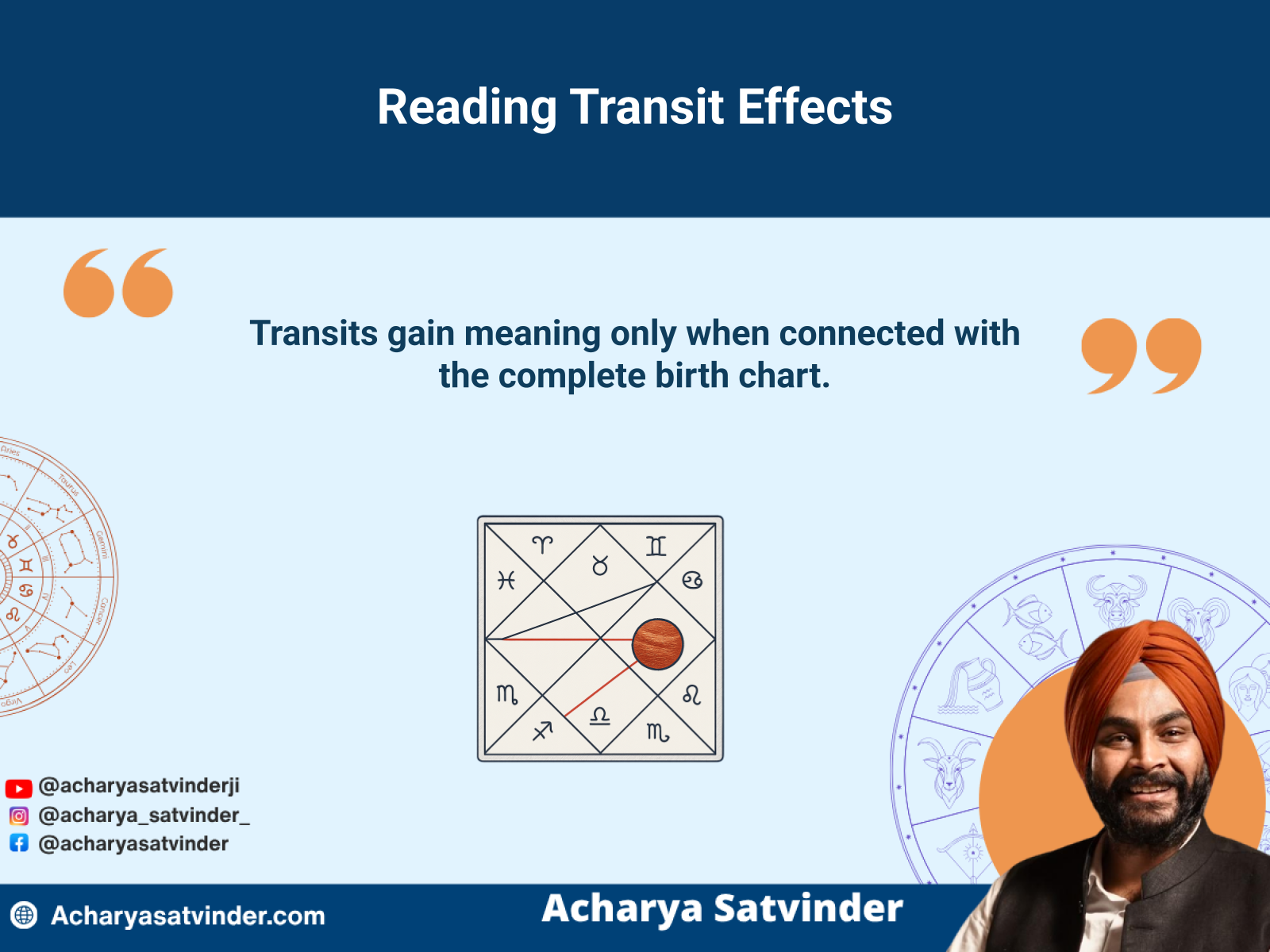
A transit becomes meaningful only after it is connected with the individual birth chart. Its sign position, house placement, aspects and relationship with natal planets must be considered together.
Begin with the natal promise
The birth chart shows the basic potential of each life area. A moving planet may activate that potential, but it cannot independently create an outcome unsupported by the wider horoscope.
The Ascendant, house lords, planetary strength and natal combinations establish the foundation. Anyone learning these basics can begin with this guide on how to read a kundli step by step.
A transit activates an existing pattern; it should not be treated as a separate destiny.
Read from more than one reference point
Transits are commonly examined from the Ascendant and natal Moon. The Ascendant connects movement with external circumstances, while the Moon helps reveal emotional experience and mental response.
An astrologer may also study the transit planet’s relationship with the dasha lord, key natal planets and sensitive house points. Advanced judgment can include degrees, nakshatras, repeated passes and overlapping aspects.
Natal Promise, Dasha and Transit Timing
The natal chart, planetary periods and current transits perform different functions. A clear reading connects all three rather than expecting one technique to answer every timing question.
The natal chart shows the field
Houses describe life areas, signs shape expression and house lords connect different parts of the horoscope. Planetary dignity, aspects and combinations show how strongly a particular promise may operate.
Dasha shows the active chapter
Mahadasha and Antardasha identify the planets carrying greater importance during a phase. Their roles can be understood through this guide to Mahadasha and Antardasha meaning.
Birth time and natal Moon details are important for accurate period calculation. If the active period is unknown, first learn how to identify the running Mahadasha.
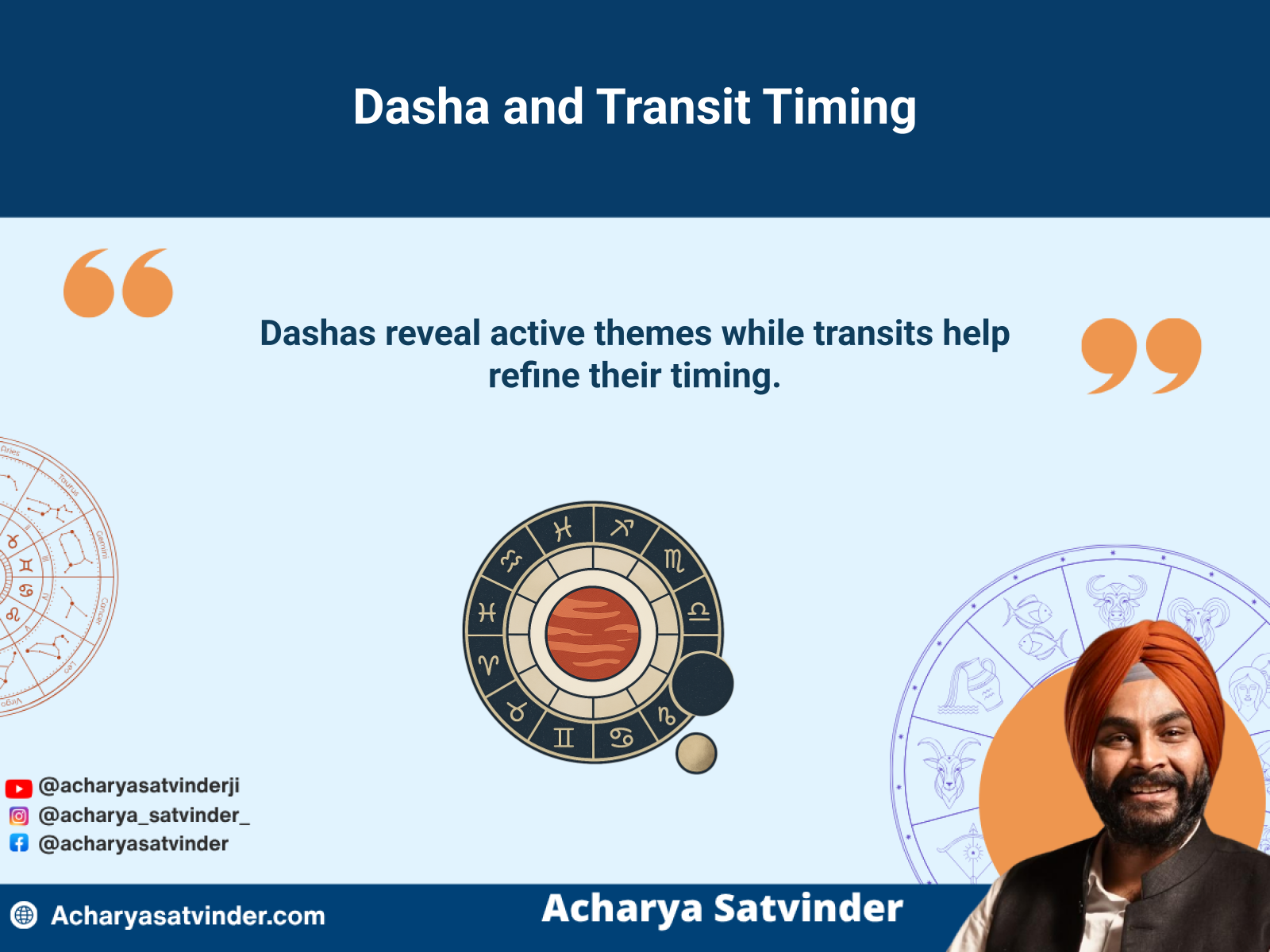
Transit helps refine timing
A transit may bring a theme closer to visible expression when it activates the houses, lords or planets connected with the running dasha. Several supporting factors provide stronger context than one movement alone.
Consider a hypothetical professional awaiting a promotion. A supportive career dasha, an activated tenth lord and favourable movement across career houses would form a more coherent pattern than a general sign forecast.
A useful reading of Gochar transit kundli effects therefore checks whether natal potential, period activation and current planetary movement point toward the same life area.
Dasha opens the active chapter, while transit helps reveal when its themes may surface.
What Each Moving Planet Can Activate
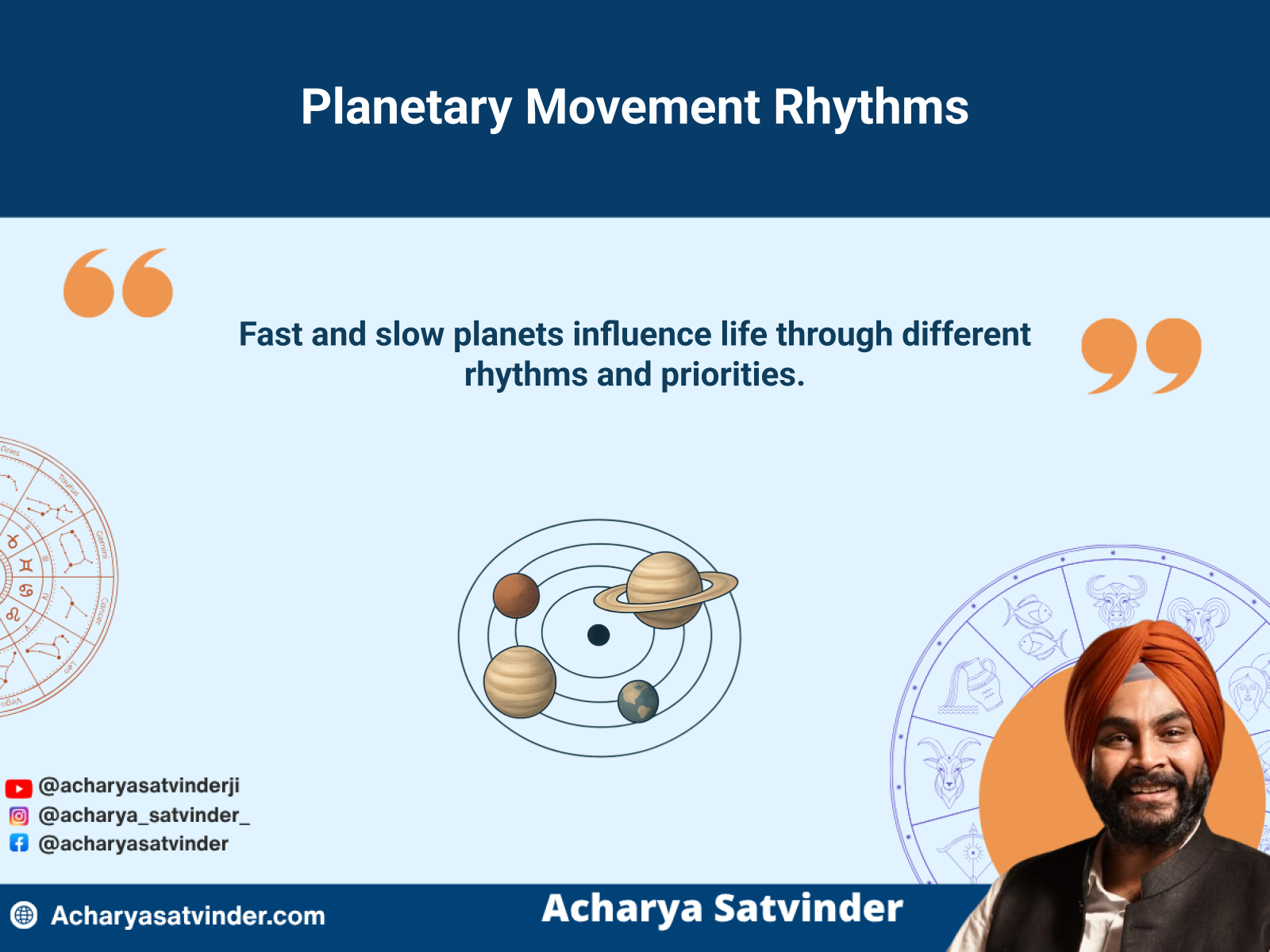
Planets move at different speeds and symbolise different concerns within Vedic interpretation. Their effects still depend on natal ownership, strength, aspects and the houses they cross.
Sun and Moon
- The Sun can bring attention to authority, confidence, responsibility, recognition and relationships with leadership figures.
- The Moon moves quickly and can reflect short emotional shifts, changing priorities, travel or domestic concerns.
Mars, Mercury and Venus
- Mars may activate initiative, competition, courage, conflict management or physically demanding work.
- Mercury can highlight communication, learning, paperwork, trade, analysis and important conversations.
- Venus may draw attention toward relationships, comfort, creativity, agreements and financial preferences.
Jupiter, Saturn, Rahu and Ketu
- Jupiter may broaden themes involving learning, guidance, opportunity, children, belief and long-term development.
- Saturn can bring sustained responsibility, delay, structure, accountability and the need for patient effort.
- Rahu and Ketu may activate unfamiliar ambitions, detachment, uncertainty, research or changes in personal direction.
None of these descriptions should become an automatic prediction. The same planet can support one life area while demanding maturity in another because its house ownership differs in every chart.
Planetary movement sets the atmosphere, but the individual chart determines its personal relevance.
House-by-House Life Areas
The house receiving a transit shows where attention may concentrate. Understanding the meanings of the twelve kundli houses provides a practical foundation for this analysis.
- First, fifth and ninth houses relate broadly to identity, intelligence, learning, purpose and personal development.
- Second, sixth and tenth houses connect with resources, duties, work, competition and practical stability.
- Third, seventh and eleventh houses concern communication, partnerships, initiative, networks and shared goals.
- Fourth, eighth and twelfth houses involve home, inner security, deep change, privacy, release and distant places.
A planet crossing a house also carries the subjects of the houses it rules. Its natal condition, conjunctions and aspects can modify how clearly, slowly or intensely those subjects become noticeable.
Health-related house activation should encourage sensible routines and timely professional care when needed. Astrology should never replace medical assessment, diagnosis or treatment.
A house identifies the life area, while planetary lordship explains the connected storyline.
Why the Same Transit Feels Different
Two people with the same Moon sign may experience one planetary movement very differently. Their Ascendants, house lords, dashas, natal strengths and personal circumstances are unlikely to match.
Because Gochar transit kundli effects depend on the complete horoscope, general sign forecasts can describe broad themes but cannot provide an individual verdict.
- The planet may rule supportive or demanding houses.
- Its natal strength may differ greatly.
- The running dasha may activate another subject.
- Natal aspects may support or complicate expression.
- Several transits may operate at the same time.
A seemingly supportive transit still requires preparation, communication and practical action. A demanding transit may encourage patience, boundaries or restructuring without making every part of life negative.
Results can also develop gradually rather than on one exact day. Slow-moving planets often reveal a process involving preparation, visible change and later adjustment.
Practical Ways to Use Transit Guidance
Transit guidance is most useful when it improves preparation rather than creating fear. It can help organise priorities, review decisions and recognise periods that require greater patience.
Use Gochar transit kundli effects as a planning framework, not as permission to avoid responsibility. The following process keeps interpretation grounded and personally relevant.
- Confirm that the recorded birth time, date and place are dependable.
- Define the real question instead of requesting a vague prediction about everything.
- Identify the relevant houses, their lords and the active planetary periods.
- Study entry, close contact, repeated movement and exit as one developing cycle.
- Choose practical actions and review progress without becoming dependent on daily forecasts.
Conscious spiritual responses
Naam Simran can support inner steadiness, while Daan and Seva can encourage humility and social responsibility. Disciplined living helps a person respond consciously to the path already shown.
These practices are not tools for changing destiny. Their value lies in strengthening awareness, patience and conduct while a person manages work, relationships, finances or family duties.
Good transit guidance strengthens judgment instead of creating dependence on constant prediction.
Common Mistakes in Transit Prediction
Transit interpretation becomes unreliable when context is removed. Avoiding a few common mistakes can prevent unnecessary fear, unrealistic expectations and poorly timed decisions.
- Declaring a planet entirely good or bad.
- Predicting an event from one house crossing.
- Ignoring the dasha and natal house lords.
- Expecting results on one exact day.
- Applying another person’s forecast to your chart.
Major turning points often involve several connected indicators. This guide to sudden life changes during planetary transit explains why broader timing patterns matter.
A responsible reading should reduce confusion and clarify choices. It should never use one transit to create panic about health, marriage, money or career.
FAQs
What does gochar mean in a kundli?
Gochar means the continuing movement of planets through the zodiac after birth. It is interpreted by comparing current positions with the natal chart.
Can a transit alone predict an important event?
A transit alone is not enough for a dependable prediction. Natal potential, house lords, planetary strength and running dashas must support the same theme.
Should transits be read from the Moon or Ascendant?
Both reference points can provide useful information within Vedic interpretation. The Ascendant relates closely to circumstances, while the Moon helps describe emotional experience.
Why can a difficult transit produce useful growth?
A demanding transit may require patience, boundaries, restructuring or sustained effort. Its constructive value depends on the complete chart and the person’s conscious response.
How often should planetary transits be reviewed?
Review major transits when making important plans or entering a changing life phase. Constant daily checking can create confusion without adding meaningful guidance.
Final Words
The real value of Gochar transit kundli effects lies in connecting planetary movement with natal potential, active dashas and practical circumstances. Complete-chart guidance can support calmer planning, disciplined choices and a more aware response to changing life periods.

Acharya Satvinder is a spiritual guide and life mentor who blends Sikh astrology, philosophy, and coaching to help you find clarity, balance, and purpose. He offers personalized guidance for career, relationships, stress, and spiritual growth — empowering you to unlock your true potential.
With over 20 years of experience, Acharya Satvinder is regarded as one of the most respected and Best astrologers in India for his ethical and disciplined approach. Each year, he guides more than 10,000 individuals through his teachings and consultations, including extensive one-to-one sessions with followers across India, Canada, USA and the global NRI community. His guidance explains discipline, conscious decision-making, seva, and inner clarity as the foundation of meaningful growth.