
Understanding the 12 houses in kundli meaning is the first step toward reading your birth chart with clarity. Each house represents a different area of life, and together they show how your experiences unfold over time.
In Vedic astrology, a kundli is not just about planets. It is a complete map of your life where houses act as stages and planets act as performers.
When you learn what each house stands for, you begin to see patterns in your relationships, career, health, and inner growth.
What Are the 12 Houses in Kundli?
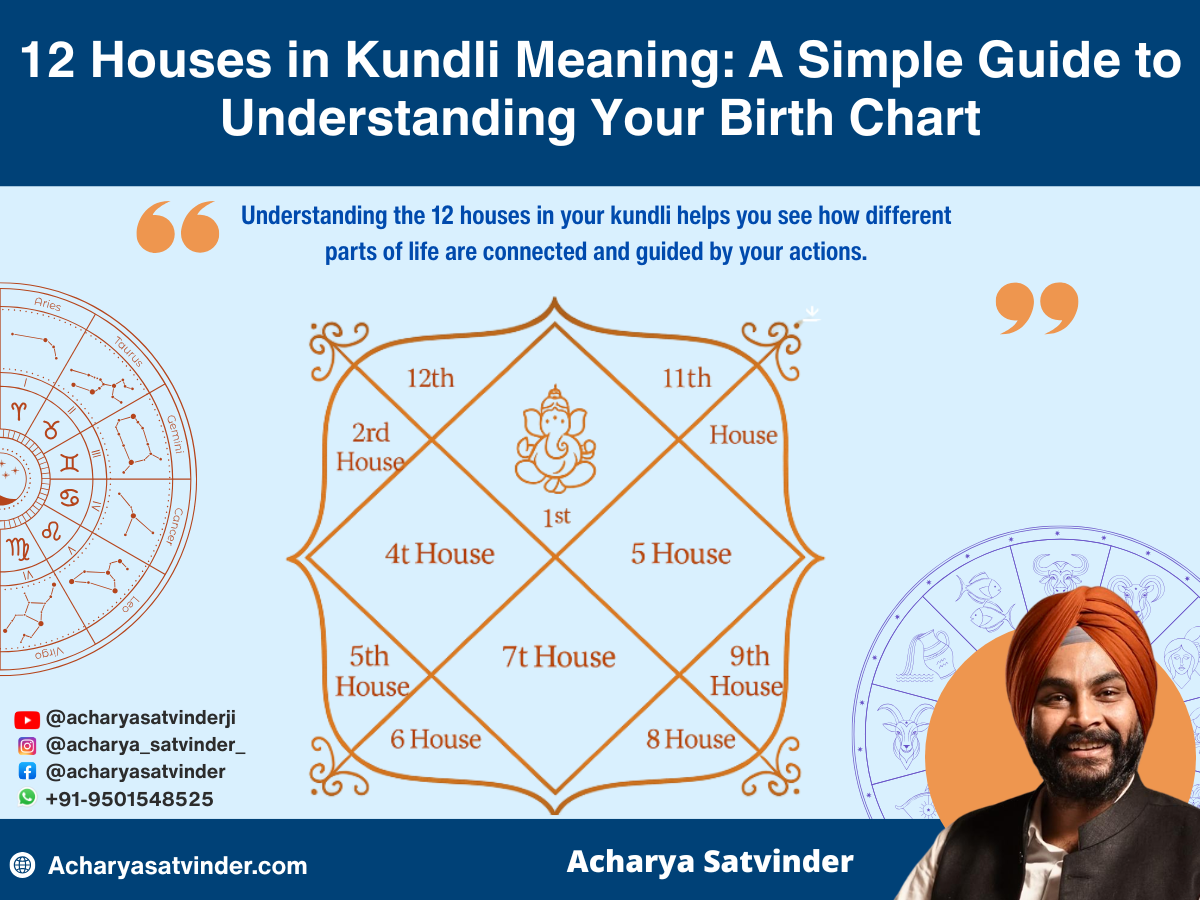
The 12 houses in a kundli divide the sky into twelve equal parts at the time of your birth. Each house governs a specific aspect of life, from your personality to your spiritual path.
These houses are fixed in meaning, but their results change based on the planets placed in them and the strength of their ruling lords.
Understanding them helps you interpret your life events with more awareness rather than confusion.
1st House: Self and Personality
The first house is also called the Lagna or Ascendant. It represents your physical body, personality, and the way you present yourself to the world.
This house sets the tone for your entire chart. A strong first house often shows confidence and clarity, while a weak one may indicate self-doubt.
According to the teachings followed by Acharya Satvinder Ji, building inner discipline and practicing Naam Simran can help strengthen your sense of self naturally.
2nd House: Wealth and Family
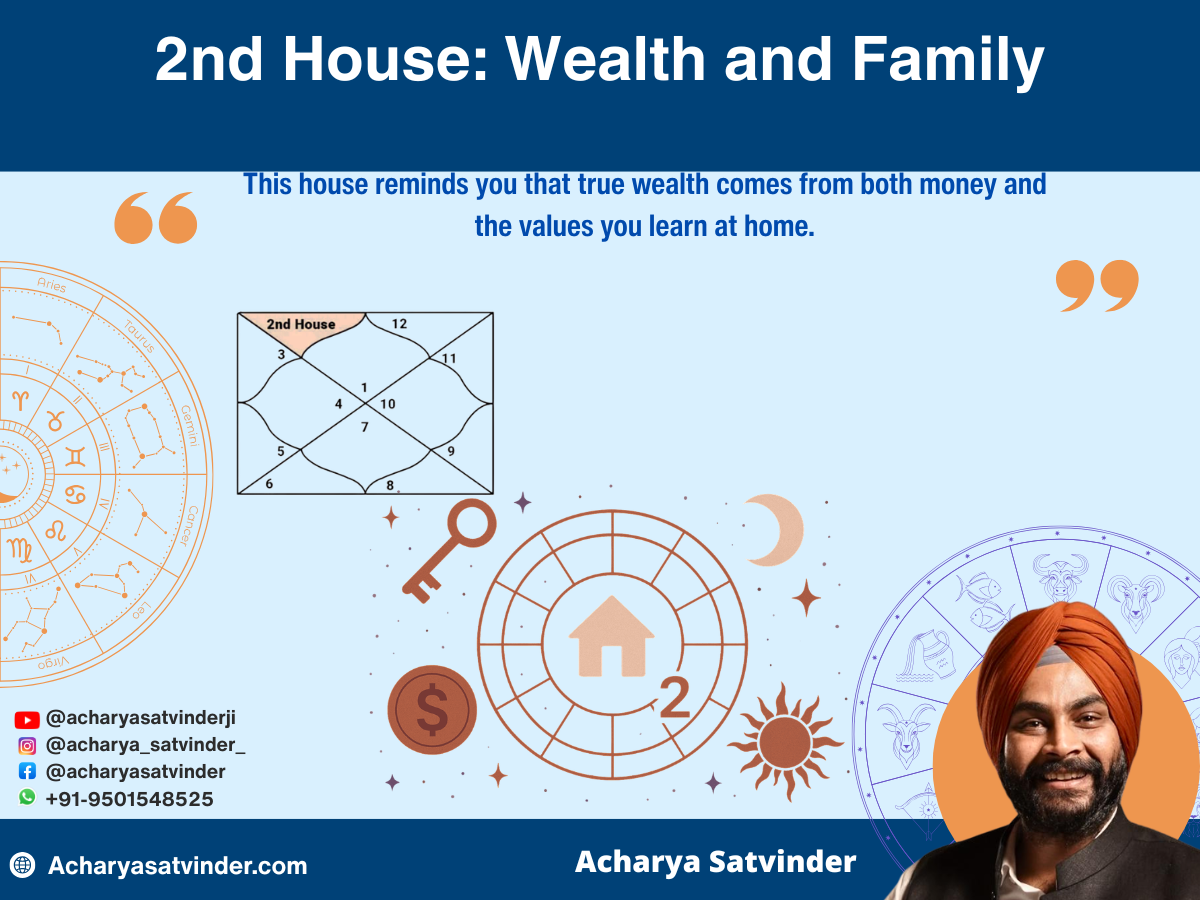
The second house relates to your income, savings, speech, and family values. It shows how you handle money and what kind of upbringing shapes your mindset.
A well-placed house can bring financial stability and polite communication.
When challenges appear here, practicing mindful speech and honest earning becomes important for long-term growth.
3rd House: Courage and Communication
The third house represents courage, effort, communication skills, and relationships with siblings. It shows how you take initiative in life.
People with a strong third house tend to be bold and expressive. If this house is weak, hesitation may hold you back.
Consistent effort and self-discipline can slowly build confidence and improve outcomes.
4th House: Home and Emotional Peace
The fourth house governs home, mother, property, and emotional stability. It reflects your inner peace and comfort.
When this house is balanced, it brings happiness in domestic life. If disturbed, you may feel unsettled even in comfortable surroundings.
Creating a peaceful environment and practicing gratitude can help bring emotional balance.
5th House: Intelligence and Creativity
The fifth house is linked to intelligence, creativity, children, and love life. It also shows your ability to make wise decisions.
A strong fifth house often brings creativity and joy. If there are challenges, decision-making may become confusing.
Staying focused and avoiding impulsive choices helps maintain balance in this area.
6th House: Health and Challenges

The sixth house represents health, daily work, debts, and enemies. It shows how you handle problems and overcome obstacles.
This house teaches resilience. Even if difficulties arise, consistent effort and a disciplined lifestyle can reduce their impact. Acts of Seva and maintaining a routine often bring stability in this house.
7th House: Marriage and Partnerships
The seventh house governs marriage, partnerships, and public relationships. It reflects how you connect with others on a deeper level.
A strong seventh house brings harmony in relationships. If imbalanced, misunderstandings may occur. Practicing patience and responsibility helps build stronger bonds over time.
8th House: Transformation and Sudden Events
The eighth house is associated with transformation, sudden changes, and hidden aspects of life. It often brings deep learning through unexpected situations.
Though this house may seem challenging, it also offers growth. Accepting change and staying mentally strong can turn difficulties into powerful life lessons.
9th House: Luck and Spiritual Growth
The ninth house represents luck, higher knowledge, dharma, and spiritual beliefs. It shows your connection with wisdom and guidance.
A strong ninth house often brings opportunities and support in life. Following righteous actions, practicing Daan, and maintaining positive karma can enhance the benefits of this house.
10th House: Career and Reputation

The tenth house governs career, profession, and public image. It reflects your achievements and how society sees you.
When this house is strong, it brings recognition and success. If weak, progress may feel slow. Staying committed to your work and maintaining integrity can gradually improve results.
11th House: Gains and Desires
The eleventh house represents income, gains, friendships, and fulfillment of desires. It shows how your efforts turn into rewards.
A balanced eleventh house brings financial growth and supportive networks. Setting realistic goals and staying consistent helps you achieve long-term success.
12th House: Loss and Spiritual Liberation
The twelfth house relates to expenses, isolation, foreign connections, and spiritual liberation. It often deals with letting go and inner growth.
While it may indicate losses, it also offers deep spiritual insight. Practicing detachment and focusing on inner peace can bring positive transformation through this house.
Role of House Lords in Kundli
Each house in your kundli has a ruling planet, known as the house lord. The position of this lord plays a major role in determining the results of that house.
For example, if the lord of the second house sits in the tenth house, it may connect wealth with career. If a house lord is strong, it supports positive outcomes. If weak, it may create delays or struggles.
Understanding house lords helps you see how different areas of life are connected. It adds depth to the basic meaning of the 12 houses in kundli.
How to Read the 12 Houses in Kundli
Reading a kundli becomes easier when you follow a step-by-step approach. Start with the Ascendant, as it defines the structure of your chart.
Next, observe which planets are placed in each house. Then look at the strength and position of house lords. Finally, understand how these elements interact with each other.
This method allows you to move from basic understanding to deeper interpretation without confusion.
What Happens When a House Is Empty?
An empty house does not mean that area of life is inactive. It simply means there are no planets placed there at birth.
The results of that house depend on its ruling planet and its position. In many cases, empty houses function smoothly without major disturbances.
This is why focusing only on planet placement is not enough. The overall chart always gives the complete picture.
Importance of Balance in All Houses
Each house in the kundli has its own role, and no single house defines your entire life. Balance between houses is what creates harmony.
When one area becomes too strong or weak, it affects other aspects of life. Maintaining discipline, positive thinking, and responsible actions helps create balance naturally.
Following simple practices like Naam Simran and living with awareness supports this balance without forcing change.
You may also like:
- Which house is for money in astrology
- How planets in 12th house affect karma
- How to know my future career by date of birth
- Planetary combinations for happy married life
- Inheritance property in astrology
Common Mistakes While Understanding Kundli Houses
Many people assume that one house can decide everything, which is not true. A kundli
must always be read as a whole.
Another common mistake is ignoring the role of house lords. Without understanding them, interpretation remains incomplete.
Some also fear certain houses like the eighth or twelfth, but these houses often bring growth through experience. Looking at them with fear limits understanding.
Conclusion
The 12 houses in kundli meaning becomes clear when you see them as a complete system rather than separate parts.
Each house represents a different area of life, and together they shape your experiences, decisions, and growth.
By understanding house meanings, observing their lords, and maintaining balance through disciplined actions, you can read your kundli with confidence.
A calm approach, supported by positive karma and awareness, allows you to use this knowledge in a practical and meaningful way.
FAQs
What is the meaning of 12 houses in kundli?
The 12 houses in kundli meaning refers to twelve areas of life shown in a birth chart, such as self, wealth, career, and relationships. Each house represents a specific life theme, and their combined interpretation helps you understand your experiences, decisions, and personal growth path clearly.
What do all 12 houses represent in astrology?
All 12 houses represent different aspects of life, starting from self-identity to spiritual growth. For example, the first house shows personality, the seventh shows relationships, and the tenth shows career. Together, they give a complete picture of how your life unfolds over time.
How can I easily understand the 12 houses in kundli?
You can understand the 12 houses in kundli by first learning what each house stands for and then observing which planets are placed in them. Focus on the Ascendant, house meanings, and ruling planets step by step to build a clear and practical understanding.
Which house is most important in kundli?
The first house is often considered the most important in kundli because it represents your personality and sets the foundation for the entire chart. However, every house has its role, and true understanding comes from analyzing how all houses work together.
What happens if a house is empty in kundli?
An empty house in kundli does not mean that area of life is inactive or missing. Its results depend on the ruling planet of that house and its position in the chart. Many empty houses function smoothly without major issues or disruptions.
How do house lords affect the 12 houses in kundli?
House lords influence how each house gives results in your life. The position and strength of a house lord can improve or challenge that area. For example, a strong house lord can bring success, while a weak one may create delays or struggles.
How do I read kundli houses step by step?
To read kundli houses, start with the Ascendant to identify house positions. Then check which planets are placed in each house and study their ruling lords. Finally, observe how these elements interact to understand life patterns and outcomes.
What is the role of the 7th house in kundli?
The 7th house in kundli represents marriage, partnerships, and relationships. It shows how you connect with others and what kind of partner you may attract. A balanced 7th house supports harmony, while imbalance may lead to misunderstandings.
What does the 10th house in kundli represent?
The 10th house in kundli represents career, profession, and public reputation. It shows your achievements and how others see your work. A strong 10th house often indicates career growth, recognition, and steady progress through consistent effort.
Why is the 12th house important in kundli?
The 12th house is important because it represents losses, expenses, and spiritual growth. It also connects with isolation and foreign experiences. While it may show challenges, it also helps you develop inner peace and detachment from unnecessary things.

Acharya Satvinder is a spiritual guide and life mentor who blends Sikh astrology, philosophy, and coaching to help you find clarity, balance, and purpose. He offers personalized guidance for career, relationships, stress, and spiritual growth — empowering you to unlock your true potential.
With over 20 years of experience, Acharya Satvinder is regarded as one of the most respected and Best astrologers in India for his ethical and disciplined approach. Each year, he guides more than 10,000 individuals through his teachings and consultations, including extensive one-to-one sessions with followers across India, Canada, USA and the global NRI community. His guidance explains discipline, conscious decision-making, seva, and inner clarity as the foundation of meaningful growth.




Pingback: How to Check If I Have Raj Yoga in My Kundli: A Complete Beginner’s Guide - Acharya Satvinder Ji
Pingback: Mahadasha Antardasha meaning in Punjabi kundli Explained