What is kundli matching? It is the Vedic practice of comparing two birth charts to understand marriage compatibility, shared patterns, sensitive areas, and the timing that may shape a couple’s journey.
The process is also called Kundli Milan or horoscope matching. It can help two people examine emotional tendencies, family expectations, relationship responsibilities, and areas requiring patience.
Acharya Satvinder Ji approaches astrology as a guiding science for understanding planetary direction, timing, and patterns shown from birth. Its purpose is conscious planning, not fear or a promise of perfect married life.
What is kundli matching and what does it compare?
Kundli matching places two complete horoscopes beside each other for a structured compatibility assessment. It studies how the individual relationship patterns in both charts may interact after marriage.
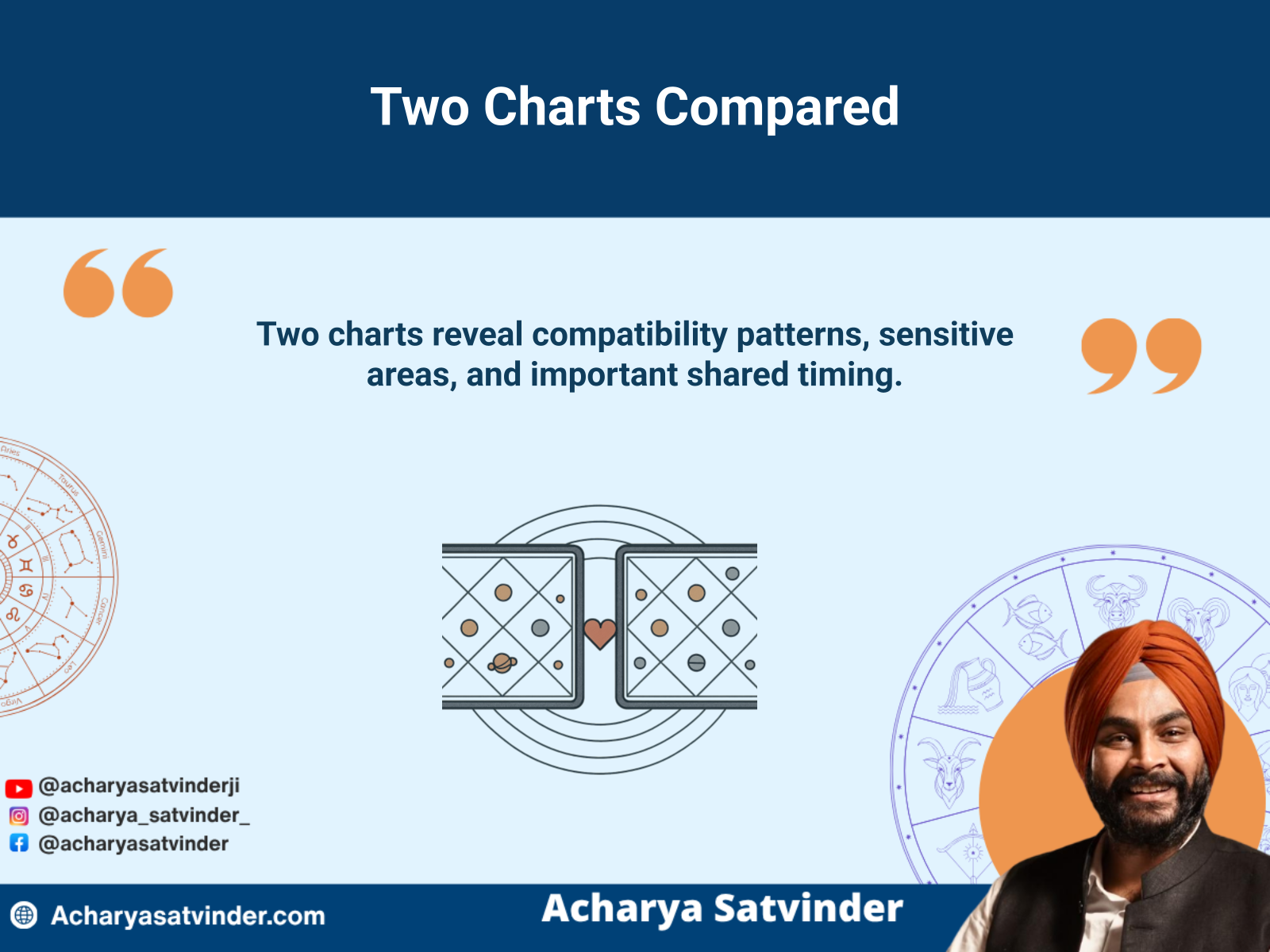
A practical answer to what is kundli matching must go beyond zodiac signs. Accurate birth details are used to calculate the ascendant, Moon, nakshatras, houses, planetary placements, aspects, strengths, and divisional charts.
It also helps to understand how a kundli reading differs from kundli matching, because one studies an individual life pattern while the other compares two people for marriage.
The comparison can reveal areas of natural understanding as well as subjects requiring mature discussion. These may include communication, emotional expression, family involvement, finances, intimacy, residence, career responsibilities, and long-term priorities.
Kundli matching identifies relationship patterns; it does not make the marriage decision for two people.
How Guna Milan works
Many traditional comparisons begin with Ashtakoota Guna Milan, which is based mainly on the Moon signs and birth nakshatras. Eight compatibility factors contribute to a total of 36 points.
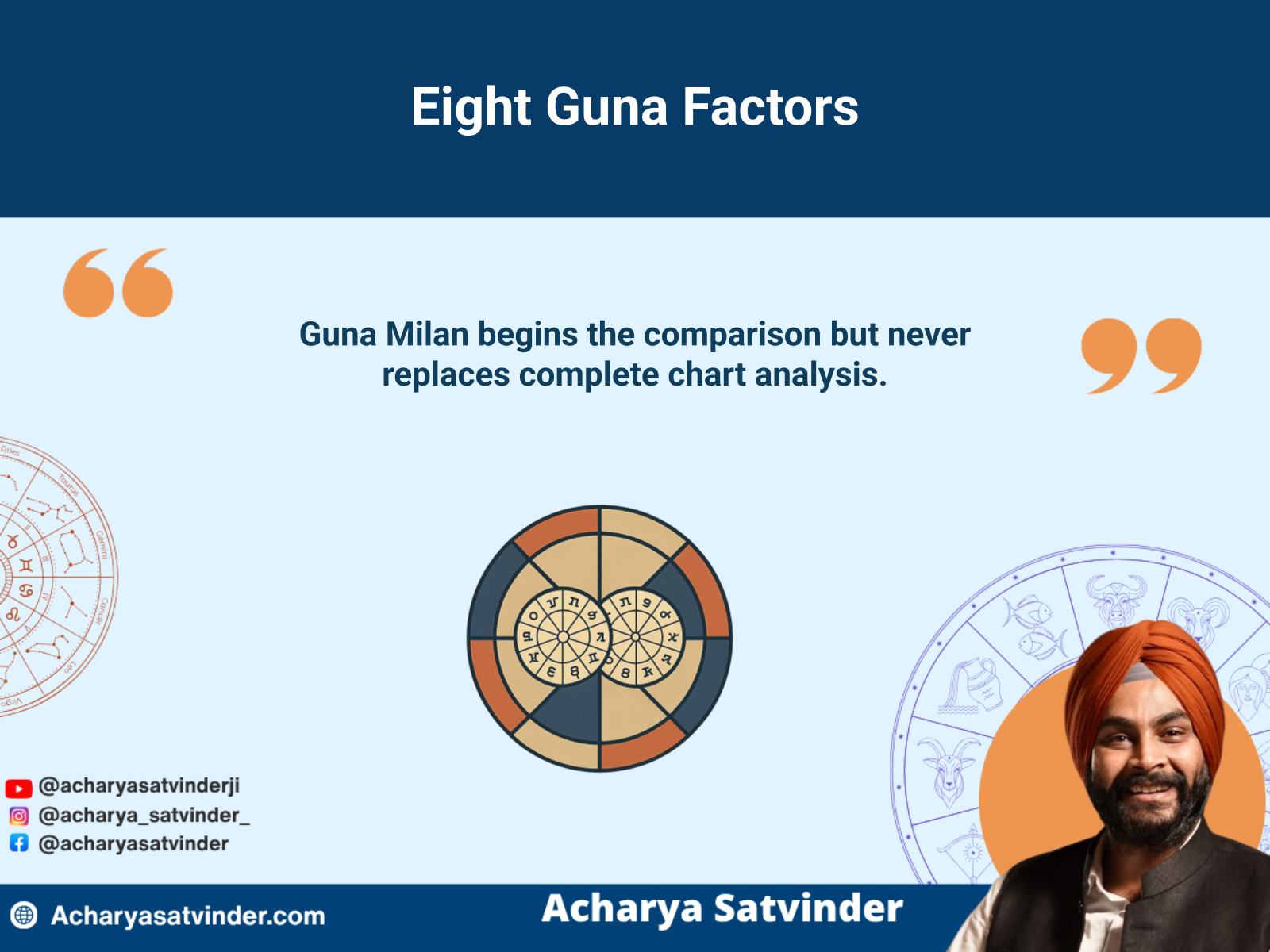
The eight Kootas
Each Koota represents a particular layer within the traditional system. The eight factors should be read together rather than interpreted as separate verdicts.
- Varna: General outlook, values, and traditional temperament classification.
- Vashya: Mutual influence, responsiveness, and the balance of interaction.
- Tara: Harmony between the two birth stars and their natural rhythm.
- Yoni: Instinctive nature, attraction, and physical comfort within the traditional framework.
- Graha Maitri: Mental rapport based on the relationship between Moon-sign lords.
- Gana: Temperament, reactions, and the way each person approaches situations.
- Bhakoot: Moon-sign relationships connected traditionally with shared direction and family life.
- Nadi: A traditional constitutional classification that requires careful contextual interpretation.
A total of 18 points is commonly treated as a preliminary benchmark in the North Indian Ashtakoota system. However, reaching or missing that figure does not complete the assessment.
The Guna total is a useful opening calculation, but the full charts explain its meaning.
Why the score is not the final answer
A numerical score is easy to understand, which is why it often receives the most attention. Yet it cannot independently measure every factor affecting marriage, commitment, adjustment, or shared timing.
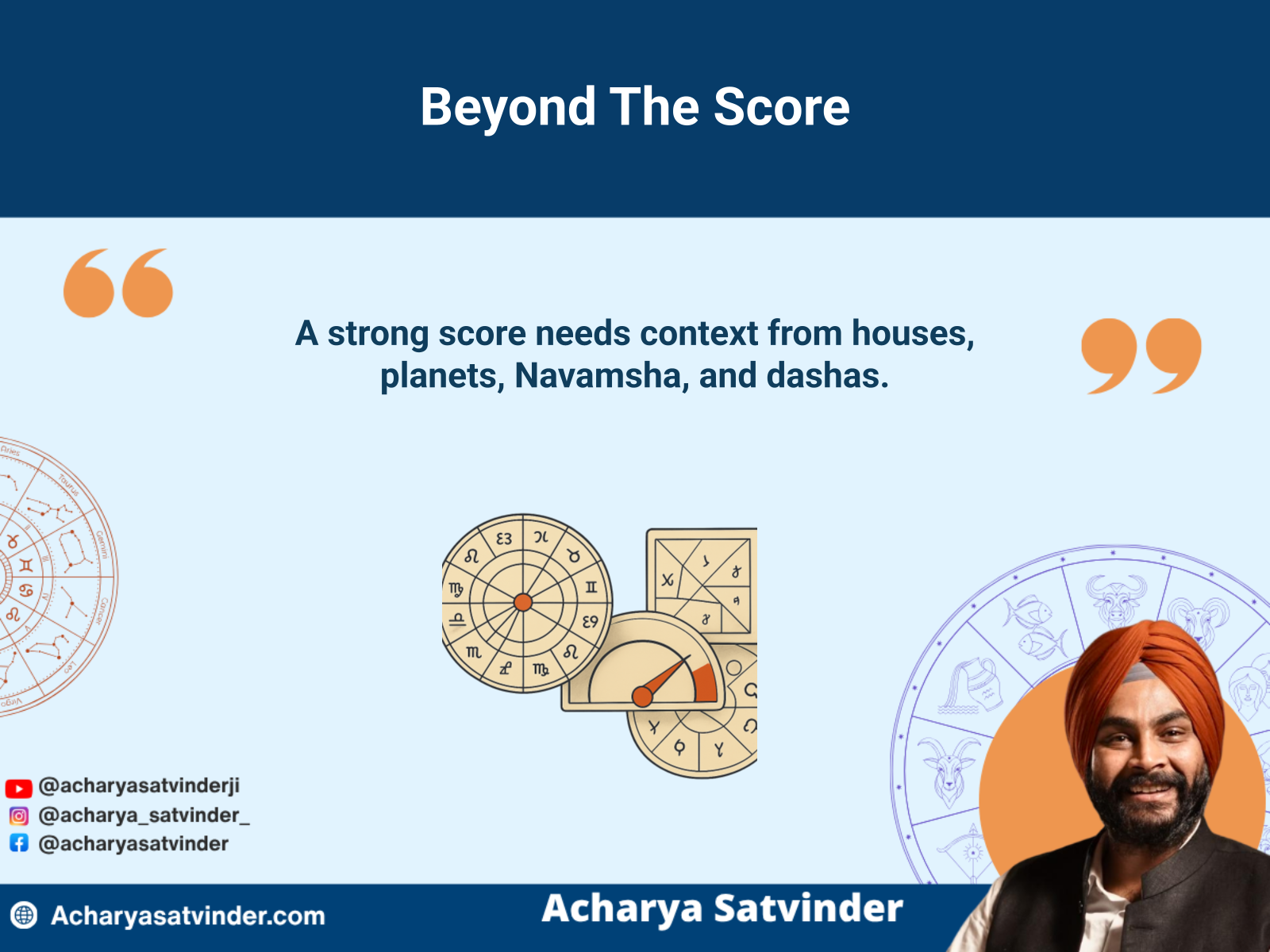
Suppose, hypothetically, one couple receives a strong score but has demanding seventh-house patterns and conflicting relationship periods. Another couple may have a moderate score alongside supportive complete charts, practical agreement, and mature communication.
Nadi or Bhakoot concerns also require proper examination instead of immediate fear. Their conditions, modifying factors, chart strength, and relationship with the remaining horoscope must be studied before drawing a conclusion.
Mars is assessed separately through the traditional Mangal framework. Its placement, strength, aspects, house lordship, comparable conditions in both charts, and relevant exceptions should be considered together.
A broader marriage astrology comparison for both partners therefore studies individual marriage potential and shared compatibility. It does not approve or reject a relationship from one number.
Questions about whether kundli matching changes with time also require clarity. Natal compatibility remains based on fixed birth charts, while dashas, transits, maturity, and circumstances affect how patterns are experienced.
A high score is not a guarantee, and a lower score is not an automatic rejection.
What a complete matching review should include
A complete review begins by studying each person separately before comparing the charts. This establishes whether both horoscopes support commitment and how each individual approaches partnership.
Individual marriage patterns
The seventh house, its lord, connected planets, aspects, and overall strength are examined with other relationship factors. The second, fourth, fifth, eighth, and twelfth houses may also add relevant context.
The Moon can describe emotional processing, while Venus, Jupiter, and Mars contribute additional relationship themes within the complete horoscope. No conclusion should be declared from one planet or house alone.
Navamsha and planetary strength
The Navamsha chart provides another layer for understanding marriage development and planetary capacity. Because it is sensitive to birth time, uncertain or rounded information should be disclosed before interpretation.
Planetary dignity, conjunctions, aspects, house lordship, and supportive or demanding combinations add context. A weak factor in one area may operate differently when supported elsewhere in the horoscope.
Dashas and shared timing
Dashas help identify which natal themes are active during a particular stage of life. Comparing both partners’ periods can reveal whether commitment, relocation, career pressure, family duties, or emotional adjustment may become prominent together.
Some people also ask about karmic marriage patterns in astrology when a bond feels unusually intense. Intensity may show meaningful duties or lessons, but it does not independently prove compatibility or permanence.
Reliable interpretation connects houses, lords, planets, strength, aspects, Navamsha, dashas, and practical circumstances.
How to interpret low or mixed compatibility
Low or mixed compatibility should lead to careful investigation rather than panic. The first task is to identify which factors reduced the score and whether the complete charts support those concerns.
A lower result may point toward different emotional styles, family expectations, conflict responses, or personal priorities. These observations are useful when they create honest questions instead of fixed labels.
Both people should consider whether they can communicate respectfully, accept responsibility, and make practical adjustments. A relationship already involving manipulation, violence, coercion, or serious dishonesty should not be justified through astrology.
When birth times are accurate, a detailed reading can distinguish between manageable differences and patterns requiring deeper reflection. When information is uncertain, the limits of the interpretation should be stated clearly.
What information is needed?
Accurate calculations require dependable birth information for both prospective partners. Small errors can affect the ascendant, houses, Navamsha, planetary degrees, and timing analysis.
When families ask what is kundli matching, they should also understand the importance of reliable source data. Each person should provide:
- Correct date of birth
- Exact recorded birth time
- Birthplace, including city and country
- Disclosure when the birth time is estimated
- Clear questions about marriage and shared responsibilities
- Consent from both people to use their information
If two automated reports disagree, verify the entered details, time zone, calculation method, and settings. A fresh report is useful when the data changes, not because the natal charts naturally become different.
Practical questions couples should discuss
Astrological guidance is most useful when it supports direct and respectful conversation. Chart comparison cannot replace learning how the other person thinks, behaves, and handles responsibility.
Before making a decision, discuss finances, debt, careers, residence, children, caregiving, faith, personal boundaries, and extended-family involvement. Observe whether both people can listen, disagree respectfully, and keep commitments.
- How will income, expenses, savings, and debt be managed?
- Where does each person expect to live after marriage?
- How will career changes or relocation decisions be made?
- What role will parents and relatives have in daily life?
- How does each person respond to conflict and emotional pressure?
- Do both people freely consent to the marriage?
After the wedding, the birth kundli itself does not change. New responsibilities and active planetary periods may bring existing patterns forward, making communication and disciplined conduct especially important.
Naam Simran, Daan, Seva, and disciplined living may be followed as conscious spiritual responses when appropriate. They support steadiness and responsibility rather than rewriting the life path indicated from birth.
Good matching creates informed questions, while character and daily conduct shape the lived relationship.
FAQs
Is Guna Milan enough for deciding a marriage?
No, Guna Milan is only one compatibility layer. Both complete charts, marriage houses, planetary strength, Navamsha, dashas, and practical understanding should also be considered.
What is considered a good kundli matching score?
A score of 18 or more is commonly treated as a preliminary benchmark in Ashtakoota matching. The total still requires context from the complete birth charts.
Can a couple marry if the kundlis do not match?
A low score does not automatically prevent marriage. The reasons behind it, complete charts, consent, communication, values, and practical readiness require careful consideration.
Does kundli matching work for a love marriage?
Yes, the same chart factors can be examined when two people are already in a relationship. The reading should support awareness rather than create pressure or fear.
Final Words
The clearest answer to what is kundli matching is that it compares two birth charts for marriage compatibility and shared timing. Its value comes from context, not from a score viewed alone.
Acharya Satvinder Ji’s approach joins complete-chart analysis with practical awareness, consent, and disciplined judgment. Used responsibly, kundli matching can clarify strengths and concerns while leaving the final decision with the two individuals involved.

Acharya Satvinder is a spiritual guide and life mentor who blends Sikh astrology, philosophy, and coaching to help you find clarity, balance, and purpose. He offers personalized guidance for career, relationships, stress, and spiritual growth — empowering you to unlock your true potential.
With over 20 years of experience, Acharya Satvinder is regarded as one of the most respected and Best astrologers in India for his ethical and disciplined approach. Each year, he guides more than 10,000 individuals through his teachings and consultations, including extensive one-to-one sessions with followers across India, Canada, USA and the global NRI community. His guidance explains discipline, conscious decision-making, seva, and inner clarity as the foundation of meaningful growth.