What is karmic marriage astrology? It is a Vedic way of understanding a marriage that carries powerful duties, repeated emotional patterns and meaningful lessons shown through two birth charts.
Such a bond may feel unusually familiar, intense or difficult to ignore. Yet intensity alone does not prove compatibility, permanence or a healthy partnership.
Acharya Satvinder Ji explains astrology as a guiding science that reveals planetary direction, timing and life patterns present from birth. It supports awareness and disciplined decisions without claiming to rewrite fate.
What is karmic marriage astrology in Vedic understanding?
A karmic marriage is interpreted as a partnership connected with unfinished duties, attachments or lessons carried into the present life. Its purpose may involve growth, responsibility, healing or clearer boundaries.
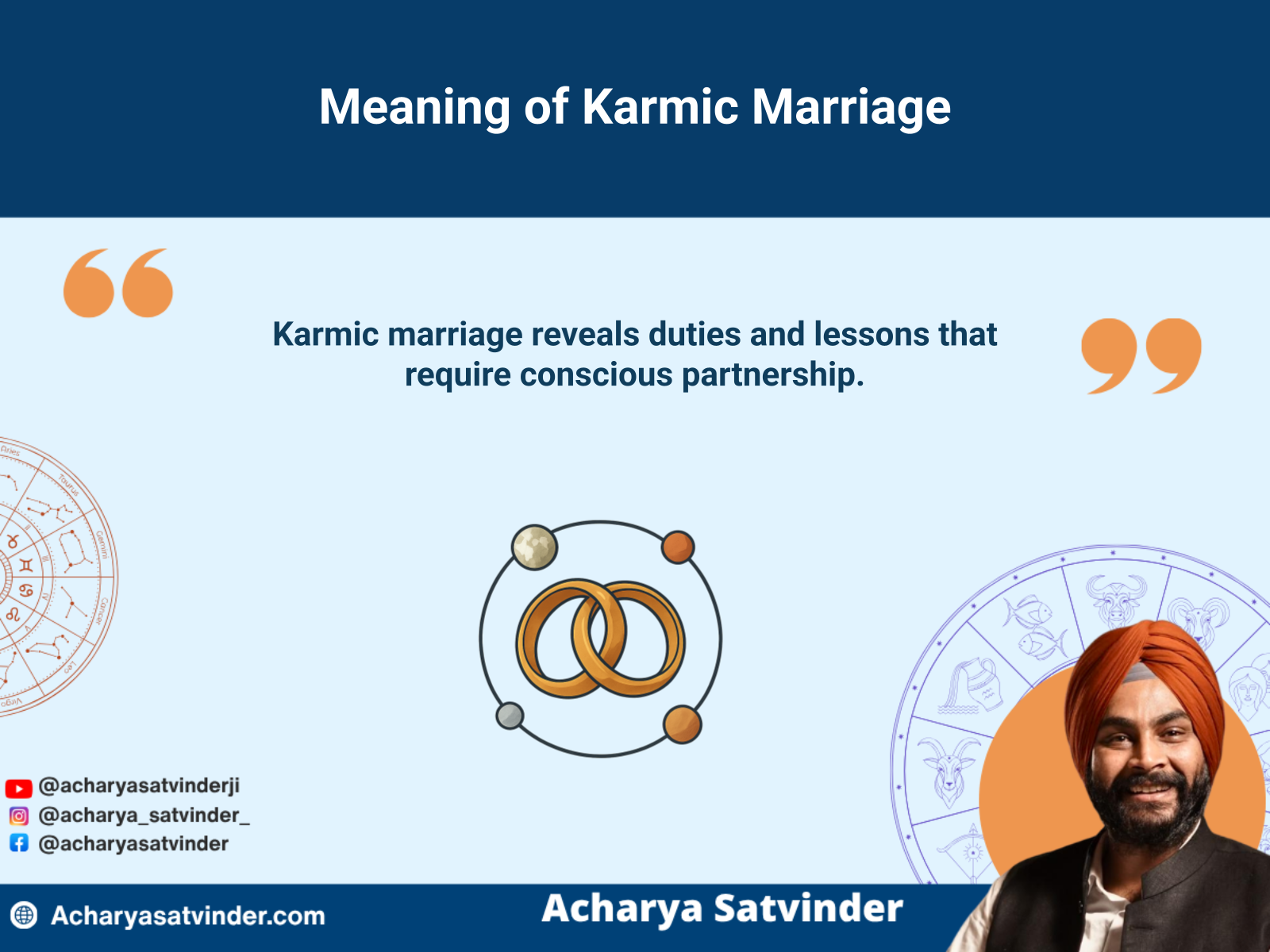
The clearest answer to the question “What is karmic marriage astrology?” begins with karma as cause and responsibility, not punishment. Marriage becomes one setting where established tendencies produce experiences and choices.
One partner may awaken the other person’s fear of rejection, need for control, emotional dependency or reluctance to trust. The relationship brings these patterns into daily life where they can no longer remain hidden.
A karmic connection may also be supportive. Two people can share loyalty, family duties and spiritual discipline because their charts indicate a strong responsibility toward building life together.
Karmic marriage is not automatically a reward or punishment. It is a relationship in which responsibility becomes difficult to avoid.
Why a Marriage Feels Karmic
Certain relationships feel larger than ordinary attraction because they activate deep emotional responses quickly. Vedic astrology studies whether the charts support this experience rather than judging it from feelings alone.
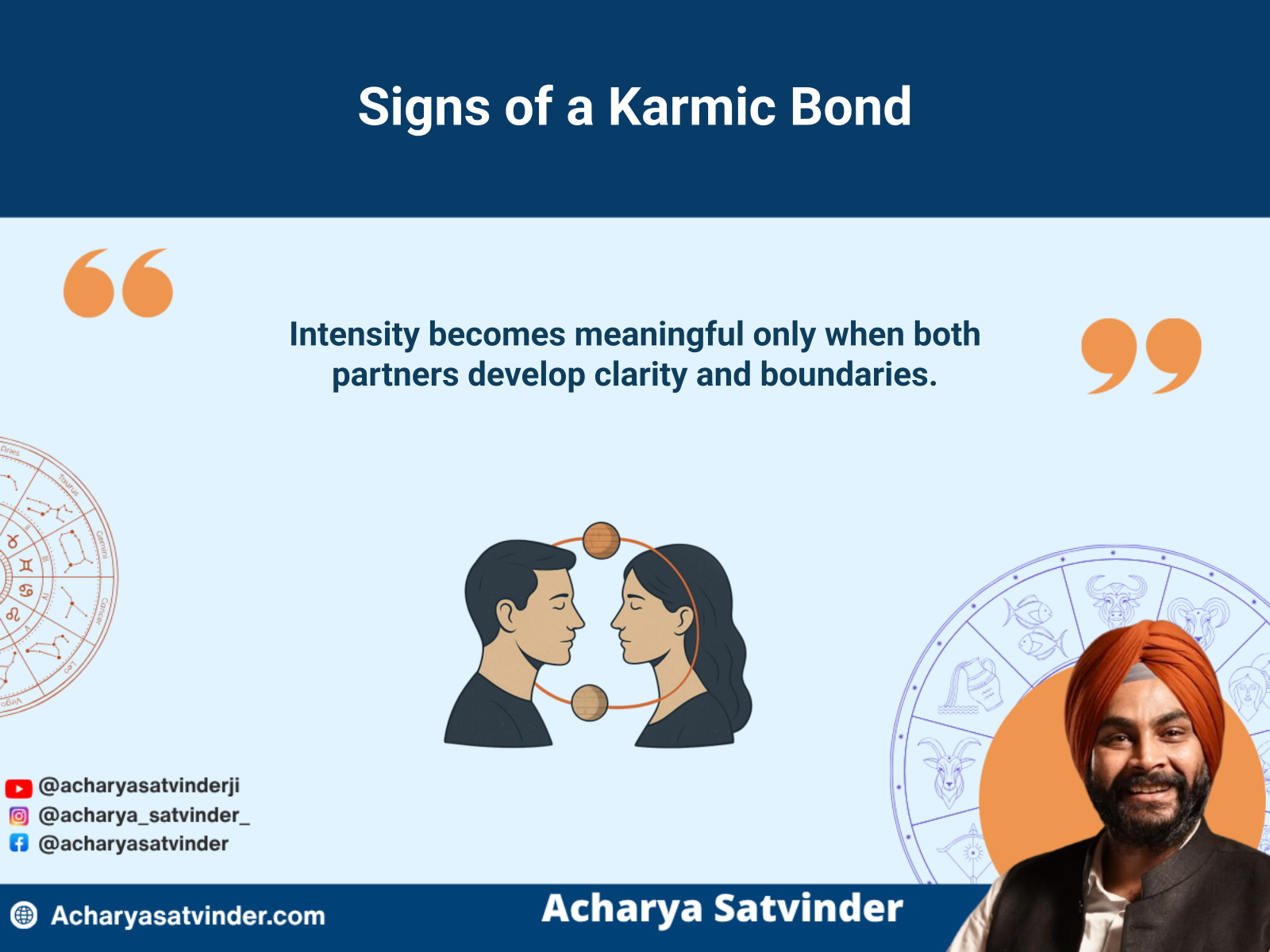
Common experiences associated with a karmic bond may include:
- An immediate sense of recognition or familiarity
- Strong attraction mixed with uncertainty
- Repeated separation and reunion patterns
- Family duties that strongly shape the relationship
- Recurring lessons involving trust, patience or boundaries
- A feeling that the relationship demands personal maturity
These experiences are not independent astrological proof. Similar patterns can arise from attachment, family pressure, unresolved conflict or different expectations about commitment.
The condition of both charts must support the interpretation. Personal behaviour, respect, communication and safety remain more important than a dramatic spiritual label.
Emotional intensity can reveal a lesson, but it should never replace compatibility, respect and clear judgement.
Kundli Factors Examined Together
A karmic marriage cannot be identified through one planet, sign or house. The complete kundli, house lords, planetary strength, aspects, conjunctions, Navamsa and active timing must support one another.
The First and Seventh House Axis
The first house represents the self, while the seventh represents committed partnership and the spouse. Their lords and mutual connections show how personal identity adjusts to the responsibilities of marriage.
The seventh house must be assessed with its lord, occupants and aspects. Readers seeking a deeper foundation can learn which house shows marriage and why isolated placement-based conclusions are incomplete.
Supporting Marriage Houses
The second house relates to family continuity, the fourth to emotional peace and the fifth to affection. The eighth can reflect intimacy, vulnerability, shared obligations and the deeper transformation that follows marriage.
The twelfth house may add insight into private companionship, sacrifice and emotional withdrawal. These houses become relevant only through their connections with the broader marriage pattern.
Navamsa and Relationship Maturity
The Navamsa, or D9 chart, is used to refine the marriage indications of the birth chart. It can show how relationship qualities mature and how the promised partnership may be experienced after commitment.
A birth-chart indication should not be discarded or declared solely from the Navamsa. Both charts require careful comparison, supported by planetary dignity and timing.
Planets Connected with Karmic Lessons
- Saturn: duty, patience, delay, realism and sustained responsibility
- Rahu: intense desire, urgency, unusual circumstances and confusion
- Ketu: detachment, inwardness, incompleteness or reduced worldly expectation
- Venus: affection, attraction, agreement and relationship values
- Jupiter: wisdom, ethics, counsel and constructive growth
- Moon: emotional needs, security, habits and mental comfort
None of these planets proves a karmic marriage independently. Their lordships, houses, strength, aspects and links with marriage indicators determine how their themes may operate.
A complete chart is essential when answering the question, “What is karmic marriage astrology?” Repeated indications across multiple layers carry more interpretive weight than one striking placement.
No planet should receive the entire blame or credit for a marriage pattern. Chart synthesis protects people from fear-based conclusions.
Timing Through Dashas and Transits
A birth chart may contain a relationship pattern, but that pattern does not remain equally active throughout life. Dashas and transits help identify when marriage, commitment or important lessons become more prominent.
Vedic planetary periods show which planets are operating at a particular stage. Marriage may become active when the relevant periods connect with the seventh house, its lord, relationship significators or supporting houses.
Transits can confirm or stimulate an existing promise, but they should not replace natal analysis. Readers can understand this layered method through the guide on how astrology predicts marriage timing.
Rahu periods may bring urgency, unconventional attraction or emotional uncertainty when supported by the chart. The detailed guide to Rahu Mahadasha effects on marriage explains why the complete pattern still matters.
Timing does not create a pattern from nothing. It activates the relationship themes already indicated in the kundli.
Karmic Does Not Mean Unhappy or Permanent
The word karmic is often wrongly used as another name for pain, conflict or separation. A karmic marriage can be loving and stable, while a difficult bond is not automatically spiritually necessary.
Some marriages teach patience through shared responsibilities. Others reveal where self-respect, honest communication or firm boundaries are needed.
Imagine a hypothetical couple who feel strongly connected but repeatedly argue about family involvement. Their charts may show deep commitment alongside different emotional habits, making maturity and communication central lessons.
The label should never be used to excuse disrespect, manipulation or harm. Astrology can guide understanding, but practical support and personal safety must remain priorities.
A relationship lesson may involve staying responsibly, changing unhealthy behaviour or accepting a necessary boundary.
Kundli Matching for a Karmic Bond
Matching two charts can reveal how each person activates the other’s strengths, fears and duties. It should assess long-term functioning rather than relying only on attraction or a single compatibility score.
The question “What is karmic marriage astrology?” becomes practical when families are considering commitment. A balanced reading studies emotional compatibility, conflict patterns, family adjustment, individual marriage promise and timing in both charts.
Traditional compatibility scoring can provide one useful layer, but it cannot replace full chart comparison. A practical guide to kundli matching for love marriage explains why personal charts and shared patterns both matter.
Astrology should support thoughtful discussion, not blind acceptance or rejection. The balanced guide on whether astrology is important for marriage can help couples use chart guidance without surrendering personal judgement.
How to Respond with Awareness
Understanding a karmic pattern is useful only when it leads to wiser conduct. Spiritual practice and disciplined living can support clarity, but they are not methods for changing the life path shown at birth.
- Communicate clearly: Discuss expectations about family, finances, affection and responsibility.
- Observe repetition: Notice the conflict that returns even when the immediate subject changes.
- Set healthy boundaries: Compassion does not require accepting harmful conduct.
- Practise Naam Simran: Use remembrance to steady the mind before important conversations.
- Choose Daan and Seva consciously: Let generosity reduce ego and strengthen responsible living.
- Respect timing: Avoid rushing commitment only because the relationship feels unusually intense.
Acharya Satvinder Ji’s approach keeps spiritual response grounded in awareness. Discipline helps a person meet the indicated path with maturity rather than fear or emotional impulsiveness.
Questions to Ask in a Marriage Reading
Before accepting a prediction, ask how the conclusion was formed and which chart layers agree. A responsible reading should explain supportive and difficult factors without frightening either partner.
- Which houses and lords create the relationship pattern?
- Does the Navamsa confirm the birth-chart indication?
- Which dasha activates marriage or a major turning point?
- Do both charts support similar timing?
- Where do emotional habits and family expectations differ?
- What practical responsibilities require greater awareness?
Clear answers should connect several factors and acknowledge uncertainty where appropriate. Absolute claims based on one placement are not a sound basis for a marriage decision.
FAQs
Is every intense relationship a karmic marriage?
No, intensity can also come from attraction, insecurity or unresolved emotional needs. A karmic interpretation requires supporting indications across both complete birth charts.
Can one planet show a karmic spouse?
No single planet can establish a karmic spouse or marriage outcome. Houses, lords, aspects, strength, Navamsa and active dashas must be assessed together.
Do Saturn or Rahu always create difficult marriages?
No, their results depend on lordship, strength, placement, aspects and timing. They may indicate responsibility or intensity without necessarily producing an unhappy marriage.
Can a karmic marriage be happy?
Yes, a karmic bond may support loyalty, shared duty and emotional growth. Happiness still depends on compatibility, conduct, communication and mutual respect.
Should someone marry only because astrology shows a strong bond?
No, a strong chart connection should not replace personal judgement and practical compatibility. Both people should consider values, behaviour, safety, consent and long-term expectations.
Final Words
What is karmic marriage astrology ultimately reveals is not a dramatic label, but a framework for understanding relationship duties, timing and recurring lessons. Read with the complete kundli, it can encourage mature choices while preserving responsibility, dignity and practical judgement.

Acharya Satvinder is a spiritual guide and life mentor who blends Sikh astrology, philosophy, and coaching to help you find clarity, balance, and purpose. He offers personalized guidance for career, relationships, stress, and spiritual growth — empowering you to unlock your true potential.
With over 20 years of experience, Acharya Satvinder is regarded as one of the most respected and Best astrologers in India for his ethical and disciplined approach. Each year, he guides more than 10,000 individuals through his teachings and consultations, including extensive one-to-one sessions with followers across India, Canada, USA and the global NRI community. His guidance explains discipline, conscious decision-making, seva, and inner clarity as the foundation of meaningful growth.