
Is astrology important for marriage? It can offer valuable guidance about compatibility, timing and relationship patterns, but it should never become the only basis for choosing a life partner.
A marriage joins two individuals, families, responsibilities and long-term expectations. Astrology can reveal tendencies shown from birth, while honest communication shows how two people handle those tendencies in daily life.
The wisest approach combines complete kundli analysis with emotional maturity, shared values and informed practical decisions.
Is astrology important for marriage in practical life?
Astrology is useful when it creates awareness instead of fear. It can identify supportive patterns, sensitive areas and periods when marriage-related developments may become more active.
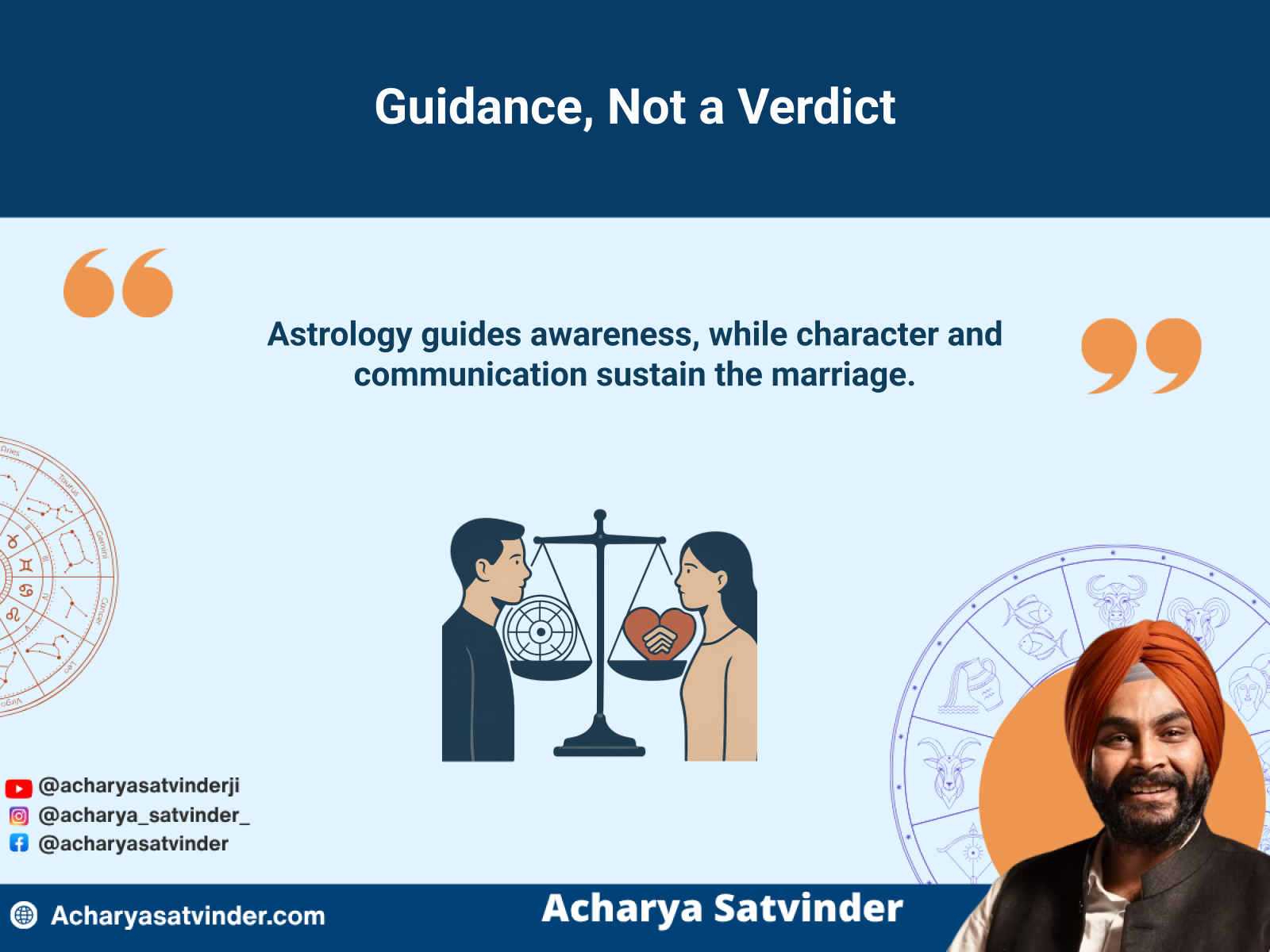
Many families ask, “Is astrology important for marriage?” because they want reassurance before making a lifelong commitment. The answer depends on how responsibly the chart is interpreted.
A birth chart can reveal relationship patterns, but it cannot replace character, consent or honest communication.
Marriage astrology is guidance, not a command. The related question of whether astrology is necessary before marriage becomes clearer when guidance and personal choice are kept in their proper places.
A responsible consultation may help a couple understand:
- How each person processes emotions and disagreement.
- Whether commitment develops easily or requires greater patience.
- Which expectations may create recurring pressure.
- When marriage discussions or decisions may gain momentum.
These insights are most useful when both individuals remain free to assess the relationship calmly.
What Marriage Astrology Actually Examines
A meaningful reading requires several connected chart factors. No single planet, house, score or dosha can provide a responsible conclusion about married life.
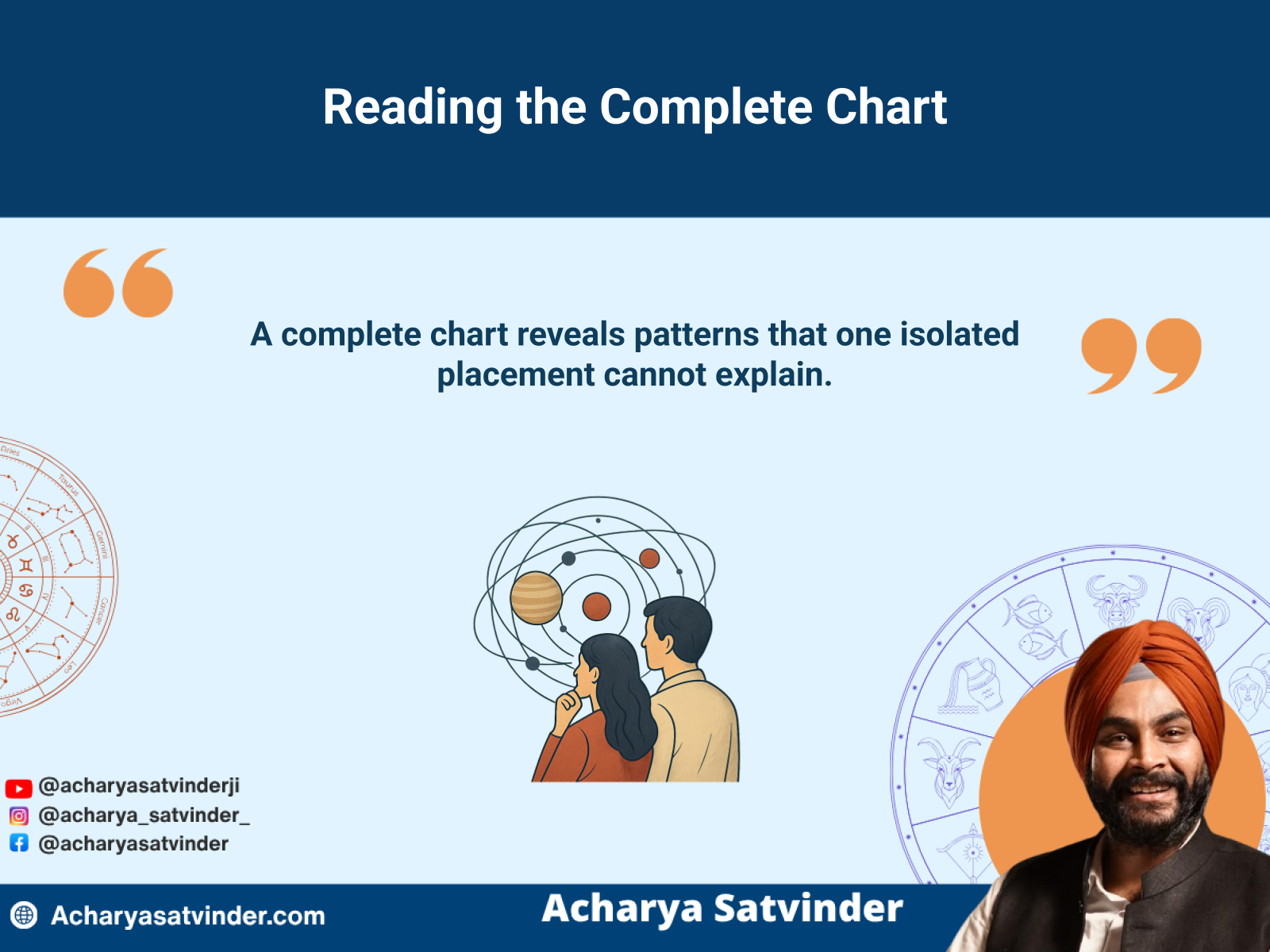
The seventh house is the primary partnership area, but its lord, occupants, aspects and planetary strength must also be studied. This practical guide to the marriage house explains why isolated conclusions are incomplete.
Core factors in a complete reading
- The seventh house and its lord: These indicate partnership tendencies, expectations and the general condition of committed relationships.
- The second house: It helps describe family continuity, shared values and adjustment within the household.
- The fourth house: This area contributes insight into domestic peace, emotional security and comfort at home.
- The fifth house: It may reveal affection, romantic expression and how naturally emotional interest develops.
- The eighth and twelfth houses: These add context about trust, shared responsibilities, intimacy and deeper adjustment.
- Marriage significators: Venus, Jupiter, the Moon, Mars, Saturn and other planets are interpreted according to their strength, lordship, aspects and chart context.
The Navamsa or D9 chart adds another important layer. Understanding the importance of the Navamsa in marriage helps explain why an apparently favourable birth chart still requires deeper examination.
A reliable marriage judgment appears through repeated indications across charts, not through one dramatic placement.
Birth details must also be reasonably accurate. An incorrect birth time can alter the ascendant, house positions, divisional charts and the timing conclusions drawn from them.
Kundli Matching: Useful, but Not the Whole Decision
Kundli matching can compare emotional, physical and temperamental patterns between two people. Its value lies in interpretation, not in treating one headline score as a final verdict.
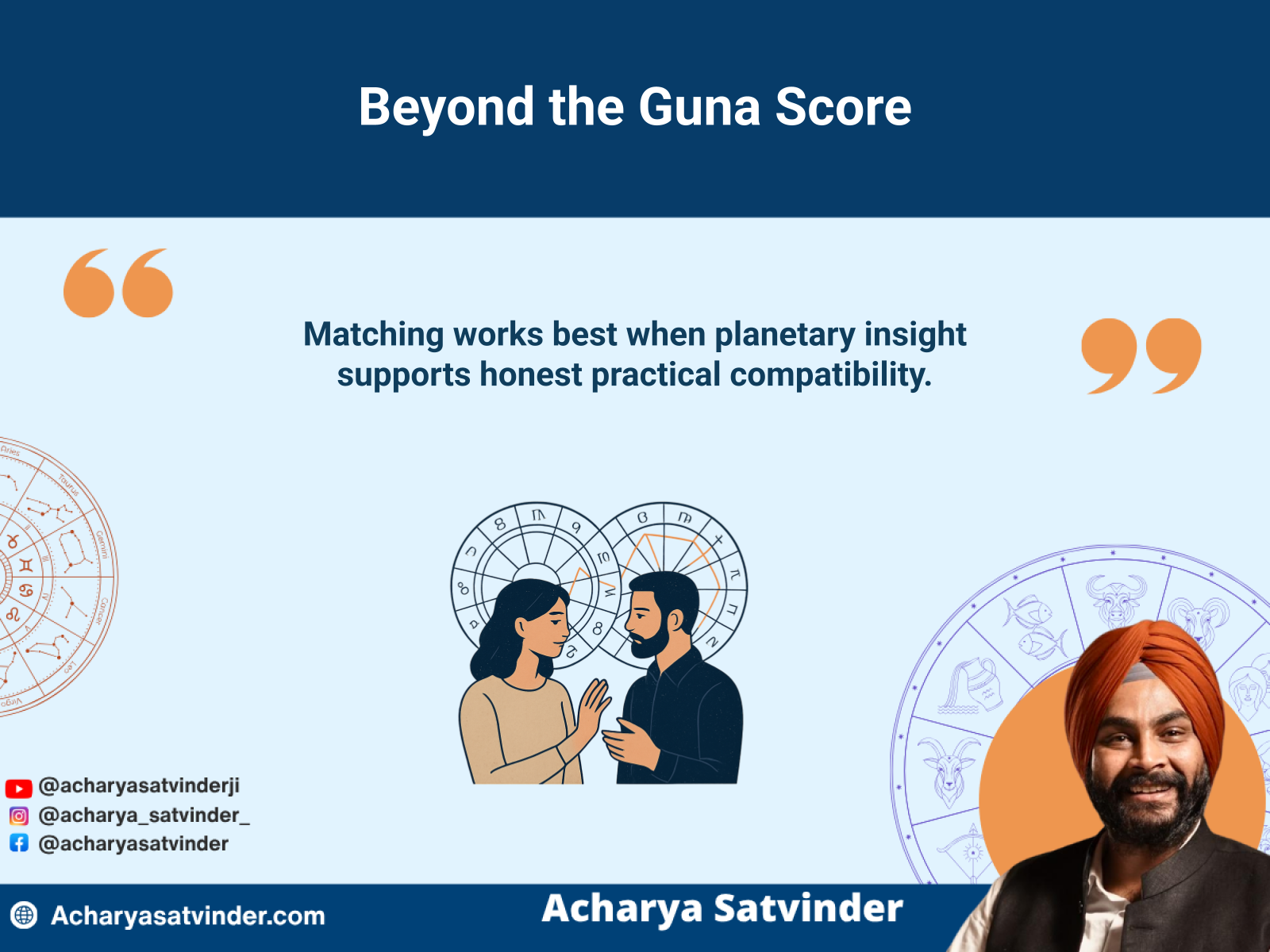
Traditional matching examines multiple compatibility areas, yet a favourable total does not automatically create respect or emotional safety. A lower total also does not independently prove that a marriage will struggle.
A thoughtful assessment should consider:
- The condition of marriage houses in both charts.
- The strength and interaction of relevant planetary lords.
- Emotional patterns shown by the Moon and related influences.
- Communication, patience, attraction and conflict responses.
- Navamsa support and the active planetary periods.
Concerns surrounding Mars should receive the same balanced treatment. A Manglik and non-Manglik marriage cannot be judged responsibly without checking strength, aspects, balancing combinations and both complete charts.
A matching score starts a conversation; it should not end the decision-making process.
Consider a hypothetical couple with a favourable score but opposing expectations about money, family boundaries and relocation. Those practical differences require direct discussion, regardless of what the score suggests.
Timing, Readiness, and Relationship Patterns
Marriage potential and marriage timing are related but different questions. A chart may show partnership possibilities while the active period determines when proposals, commitment or adjustment become more prominent.
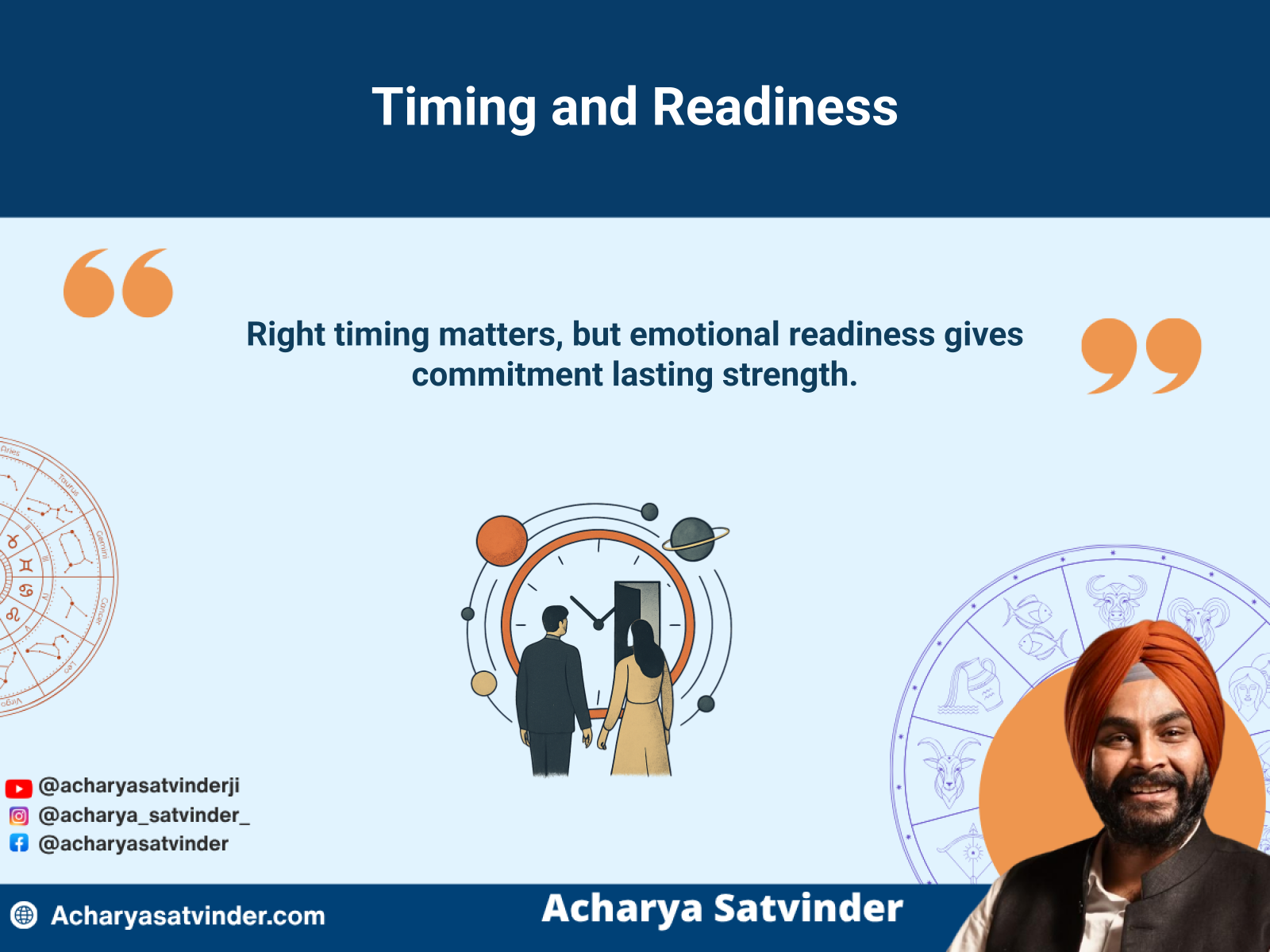
Dashas, antardashas and major transits are studied alongside natal promise and the Navamsa. A detailed explanation of how astrology predicts marriage timing shows why one transit alone is insufficient.
Timing is not permission
A supportive period does not mean someone must marry the first available person. It indicates that relationship events may become more active, making awareness and careful judgment especially valuable.
Before commitment, both individuals should still examine:
- Emotional willingness to accept responsibility.
- Financial expectations and career priorities.
- Family roles and personal boundaries.
- Communication during disagreement or uncertainty.
Favourable timing opens possibilities, while readiness determines how wisely those possibilities are handled.
Delay should not automatically be treated as punishment or permanent denial. Saturn, Mars, Rahu or other influences must be interpreted through dignity, lordship, aspects, strength and the complete planetary period.
When Astrology Helps—and Where It Stops
Marriage astrology is most useful when genuine uncertainty remains after practical conversations. It can organise concerns and show where patience, preparation or clearer expectations may be needed.
For anyone asking, “Is astrology important for marriage?” the balanced answer is yes, as a source of direction. It is not a substitute for personal responsibility or informed consent.
Astrological guidance may be especially helpful when:
- Suitable proposals appear but decisions repeatedly remain unclear.
- A couple understands each other yet experiences recurring conflict.
- Families focus excessively on one score or planetary label.
- Marriage discussions continue, but timing appears unsettled.
- A love relationship is moving toward formal commitment.
Astrology cannot verify honesty, diagnose health conditions or evaluate legal and financial risks. These matters require direct evidence, appropriate professional advice and transparent discussion between both families.
Acharya Satvinder Ji approaches astrology as a guiding science for understanding planetary direction, timing and patterns visible from birth. Its purpose is to support awareness and discipline, not to rewrite the life path.
Naam Simran, Daan, Seva and disciplined living may support inner steadiness when practised consciously. They should not be treated as shortcuts around communication, responsibility or the lessons indicated by the chart.
A Balanced Checklist Before Marriage
A good decision considers both the kundli and the people living the marriage. Use astrological insight to ask better questions rather than to avoid necessary conversations.
- Confirm accurate birth details. Even a small uncertainty in birth time should be disclosed before divisional charts or timing are assessed.
- Request a complete analysis. Ask how the houses, lords, aspects, planetary strengths, Navamsa and dashas support the conclusion.
- Discuss real-life expectations. Cover finances, work, children, caregiving, residence, personal space and relationships with extended family.
- Observe conflict behaviour. Notice whether both people can listen, apologise, set boundaries and discuss difficult subjects without humiliation.
- Avoid fear-based decisions. One difficult placement should lead to deeper analysis, not immediate rejection or panic.
- Respect personal choice. Both individuals must have the freedom and emotional clarity to accept or decline the relationship.
The strongest decision joins planetary awareness with respect, maturity and practical compatibility.
This balanced process allows astrology to serve its proper purpose. It clarifies patterns and timing while leaving the couple responsible for their conduct and choices.
FAQs
Is astrology important for marriage if the Guna score is low?
A lower score should be examined with both complete charts rather than viewed in isolation. Marriage houses, planetary strength, Navamsa and practical compatibility may provide essential context.
Can a marriage succeed without kundli matching?
A marriage can develop well when both partners share respect, honesty and emotional maturity. Kundli matching may add guidance, but it does not replace these foundations.
Which chart is most important for marriage?
The birth chart establishes the main relationship promise, while the Navamsa adds deeper insight into marital development. Both should be read together with planetary periods and relevant house lords.
Can astrology guarantee a happy marriage?
Astrology cannot guarantee happiness because behaviour and choices remain important within every relationship. It can reveal strengths, pressures and patterns that help a couple prepare consciously.
Should one difficult planetary placement stop a marriage?
One placement should never decide the entire outcome without complete chart analysis. House lords, aspects, strength, balancing influences, Navamsa and timing must all be considered.
Final Words
The balanced answer to “Is astrology important for marriage?” is that it can be deeply useful without becoming absolute. It reveals direction, timing and relationship patterns that deserve conscious attention.
A complete chart reading should support communication, not replace it. When planetary insight is combined with shared values, emotional readiness and disciplined judgment, marriage decisions become calmer and more informed.

Acharya Satvinder is a spiritual guide and life mentor who blends Sikh astrology, philosophy, and coaching to help you find clarity, balance, and purpose. He offers personalized guidance for career, relationships, stress, and spiritual growth — empowering you to unlock your true potential.
With over 20 years of experience, Acharya Satvinder is regarded as one of the most respected and Best astrologers in India for his ethical and disciplined approach. Each year, he guides more than 10,000 individuals through his teachings and consultations, including extensive one-to-one sessions with followers across India, Canada, USA and the global NRI community. His guidance explains discipline, conscious decision-making, seva, and inner clarity as the foundation of meaningful growth.




Pingback: Marriage astrology check online: Complete Vedic Guide
Pingback: What is karmic marriage astrology? A Vedic Guide