
Astrology names for business can help founders evaluate whether a proposed identity suits their birth chart, commercial direction, audience, and long-term plans. The name should still remain clear and practical.
A pleasing sound or preferred number is not enough by itself. Customers must be able to understand, pronounce, remember, search, and confidently recommend the name.
Acharya Satvinder Ji describes astrology as a guiding science for understanding planetary direction, timing, and life patterns shown from birth. This awareness supports disciplined planning without replacing business judgement.
How Astrology names for business should be chosen
A strong name must fit the founder, the venture, and the intended customer experience. It should also remain useful as the business expands into new services or markets.
Begin by defining what the business offers and the impression it should create. Trust, creativity, speed, precision, care, authority, and accessibility require different naming approaches.
- Chart suitability: Does the complete Kundli support the proposed commercial direction?
- Brand meaning: Does the name communicate a relevant and credible identity?
- Practical usability: Can customers pronounce, spell, remember, and share it easily?
A business name should clarify the offer before carrying astrological symbolism.
The purpose of Astrology names for business is to refine a commercially sound shortlist. It is not to make an unclear or unsuitable idea appear promising through symbolism alone.
Naming is one part of planning a business through Vedic astrology. The owner must also examine suitability, demand, capital, responsibilities, partnership structure, and launch readiness.
Chart factors behind a suitable name
Name analysis begins with the founder’s complete birth chart rather than one preferred planet or sign. The reading should connect identity, enterprise, trade, profession, resources, and gains.
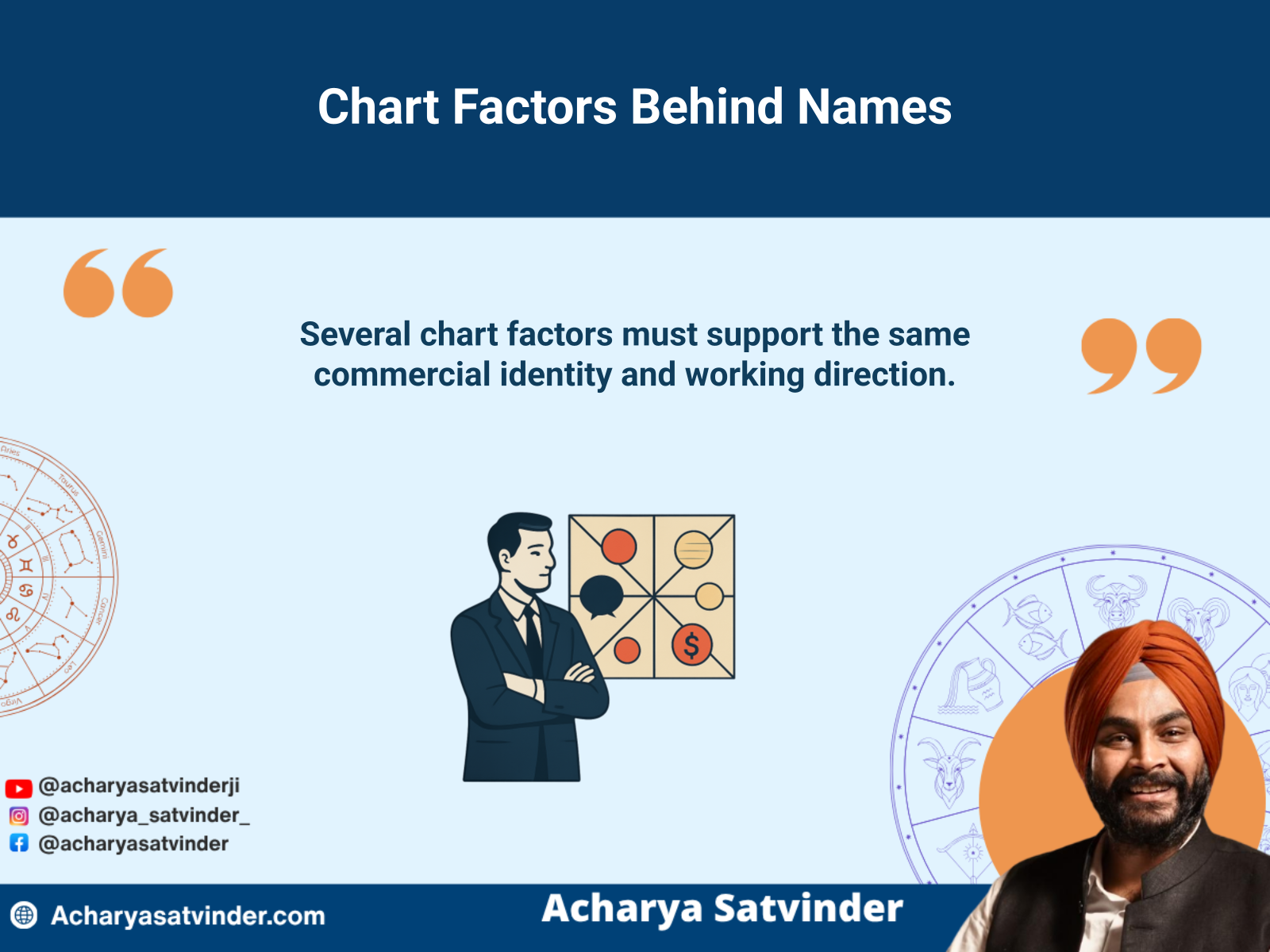
The ascendant and its lord describe general temperament and personal direction. Several commercial houses are then examined to understand how the founder communicates, serves customers, manages responsibility, and pursues income.
- Second house: Speech, values, resources, and financial continuity.
- Third house: Communication, enterprise, courage, marketing, and self-effort.
- Seventh house: Trade, customers, contracts, negotiation, and partnership.
- Tenth house: Profession, authority, reputation, and sustained responsibility.
- Eleventh house: Networks, commercial reach, income, and gains.
A planet describes a tendency, but the complete chart shows whether it can operate constructively.
A detailed review of business factors in an astrology chart considers house lords, planetary strength, aspects, conjunctions, divisional support, and relationships among the relevant houses.
Dashas and transits add timing context. A name may suit the overall chart, while the active period still calls for careful testing, stronger systems, or controlled commitment.
Sound, meaning, and brand usability
A business name is spoken, heard, typed, and remembered before its deeper symbolism is considered. Its sound and meaning therefore deserve the same attention as chart compatibility.
Short names can be useful, but length alone does not create recall. Rhythm, spelling, emotional tone, initials, pronunciation, and connection with the service all influence everyday usability.
Traditional naming may consider the opening sound associated with a nakshatra and pada. This can provide direction, although it should not become a rigid rule for every commercial identity.
- Say each shortlisted name aloud at normal conversational speed.
- Ask another person to spell it after hearing it once.
- Check whether the meaning suits the business and audience.
- Consider whether the name permits future expansion.
Sound and meaning should strengthen customer understanding, not create repeated explanation.
A deeper guide to selecting the best astrology business name can help compare chart suitability with meaning, pronunciation, recall, positioning, and real-world use.
Numerology as a supporting filter
Numerology can compare the letter pattern and compound value of shortlisted names with the founder’s birth details. It works best after clear and commercially relevant options have been created.
The same calculation method should be applied consistently to every candidate. Switching systems merely to obtain a preferred result makes the comparison unreliable and difficult to explain.
Why the number alone is insufficient
A preferred total does not correct confusing spelling, weak positioning, or an unsuitable meaning. It also cannot replace the wider assessment of the founder’s chart and operating period.
- Compare the exact spelling customers will normally use.
- Review the compound value as well as the reduced value.
- Consider the owner’s birth pattern and commercial activity.
- Use the calculation to narrow options, not create promises.
A numerical total should refine a strong shortlist, not rescue a weak name.
Astrology names for business become more useful when chart direction, sound, meaning, numerical analysis, and customer understanding support the same choice.
A step-by-step selection method
A structured process reduces emotional attachment to the first attractive idea. It also makes weaknesses easier to identify before money is spent on registration, design, signage, or packaging.
- Define the offer: Record the products, services, audience, and price position.
- Choose the impression: Decide what customers should feel or understand immediately.
- Review the chart: Examine commercial houses, planets, strengths, aspects, and timing.
- Create a broad shortlist: Develop several meaningful options with exact spellings.
- Assess sound and number: Compare pronunciation, initials, rhythm, and numerical pattern.
- Test recall: Ask whether people can remember and spell the name correctly.
- Verify availability: Search relevant registries, trademarks, domains, and public profiles.
Imagine a hypothetical advisory firm choosing between an abstract name and a clear knowledge-based identity. The final option should balance chart support with credibility, customer recall, future services, and registration concerns.
Name selection and launch timing answer different questions. One concerns identity, while the other considers when registration, signing, opening, or public promotion should begin.
Practical checks before registration
Astrological suitability should be confirmed before major branding expenses, but it is not the final approval. Availability, legal distinctiveness, digital access, and customer interpretation require separate investigation.
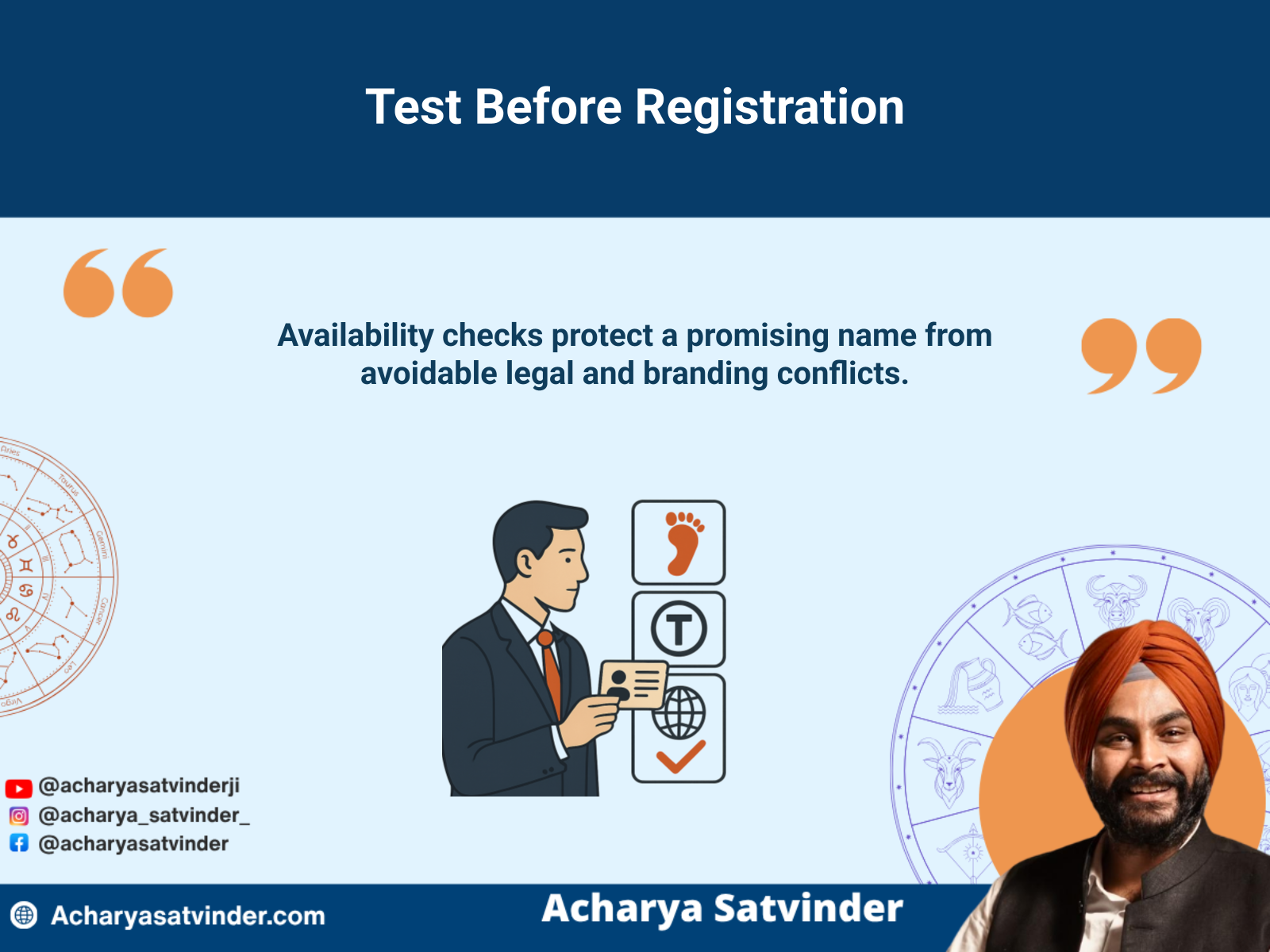
Search both exact and similar spellings because confusion can arise through appearance, sound, or closely related services. Professional legal advice may be appropriate when the identity will carry significant commercial value.
- Check the appropriate business or corporate name registry.
- Search trademark records for identical and confusingly similar names.
- Review domain availability and common social profile variations.
- Confirm that the name does not misdescribe the service.
- Avoid printing permanent materials before completing these checks.
Astrology names for business should survive both astrological review and practical due diligence. A suitable chart connection has limited value if the name creates confusion or cannot be protected.
Astrological suitability guides selection, while verified records protect the practical identity.
Registration of a business name and protection of a trademark are not always the same process. Ask a qualified professional which searches and protections apply to your structure and activities.
Common business naming mistakes
Most naming difficulties arise when one consideration is allowed to dominate every other concern. A balanced review prevents avoidable confusion, expense, and repeated changes after launch.
Selecting only by number
A preferred numerical pattern cannot carry a name that is unclear, difficult to spell, or disconnected from the actual offer. Start with meaningful options and use numbers later.
Copying fashionable styles
A trend-based identity can quickly feel dated or resemble many unrelated brands. Choose a name that remains relevant if products, services, or customer groups expand.
Using difficult spelling
Unusual spelling may look distinctive but weaken referrals, searches, email accuracy, and trust. Distinction should come from positioning and meaning rather than unnecessary complexity.
Expecting the name to repair operations
A suitable name cannot correct weak service, uncontrolled expenses, poor collections, or unclear agreements. These concerns require responsible management and qualified practical advice.
When personally meaningful, business growth guidance and disciplined remedies may include Naam Simran, Daan, Seva, and disciplined living as conscious responses. They do not replace operational correction.
When personalized guidance helps
General principles can improve a shortlist, but they cannot resolve every conflict among chart factors, partners, timing, and brand strategy. Personalized guidance is useful when several options appear equally suitable.
Acharya Satvinder Ji reviews the name within the wider business question rather than declaring a result from one isolated placement. The goal is a reasoned shortlist, not an unsupported promise.
- Accurate birth date, time, and place
- Exact business activity and intended audience
- Ownership structure and active partners
- Candidate names with final spellings
- Current business stage and intended milestone
A focused business astrology reading for clearer decisions can connect naming with the founder’s commercial pattern, active dashas, responsibilities, and practical choices.
If partners are involved, their roles and decision authority should also be understood. A name that suits one founder should not be approved without considering the wider ownership arrangement.
FAQs
Can astrology suggest the first letter of a business name?
Astrology may suggest suitable opening sounds through the complete chart and nakshatra analysis. The final name must still be meaningful, memorable, and commercially practical.
Can numerology assure business success?
Numerology can help compare the patterns of shortlisted names. Business results still depend on demand, planning, financial control, service quality, and consistent effort.
Should a legal suffix be included in name calculations?
The public-facing brand and complete registered name may be reviewed separately. Use one consistent method and clarify which version customers will regularly speak or see.
Can an existing business be renamed through astrology?
An existing business can be reviewed when its identity no longer suits its direction or audience. Rebranding costs, customer recognition, contracts, records, and legal availability must also be considered.
What birth details are needed for business name analysis?
Provide the accurate birth date, exact time, and place of the founder. Business activity, ownership details, candidate spellings, and the intended launch stage are also useful.
Final Words
Astrology names for business should bring together planetary direction, clear meaning, customer recall, numerical support, and practical availability. No single factor should control the decision.
Choose a name that suits the complete chart while remaining credible and easy to use. Astrological insight becomes valuable when it strengthens disciplined research, responsible planning, and consistent business conduct.

Acharya Satvinder is a spiritual guide and life mentor who blends Sikh astrology, philosophy, and coaching to help you find clarity, balance, and purpose. He offers personalized guidance for career, relationships, stress, and spiritual growth — empowering you to unlock your true potential.
With over 20 years of experience, Acharya Satvinder is regarded as one of the most respected and Best astrologers in India for his ethical and disciplined approach. Each year, he guides more than 10,000 individuals through his teachings and consultations, including extensive one-to-one sessions with followers across India, Canada, USA and the global NRI community. His guidance explains discipline, conscious decision-making, seva, and inner clarity as the foundation of meaningful growth.